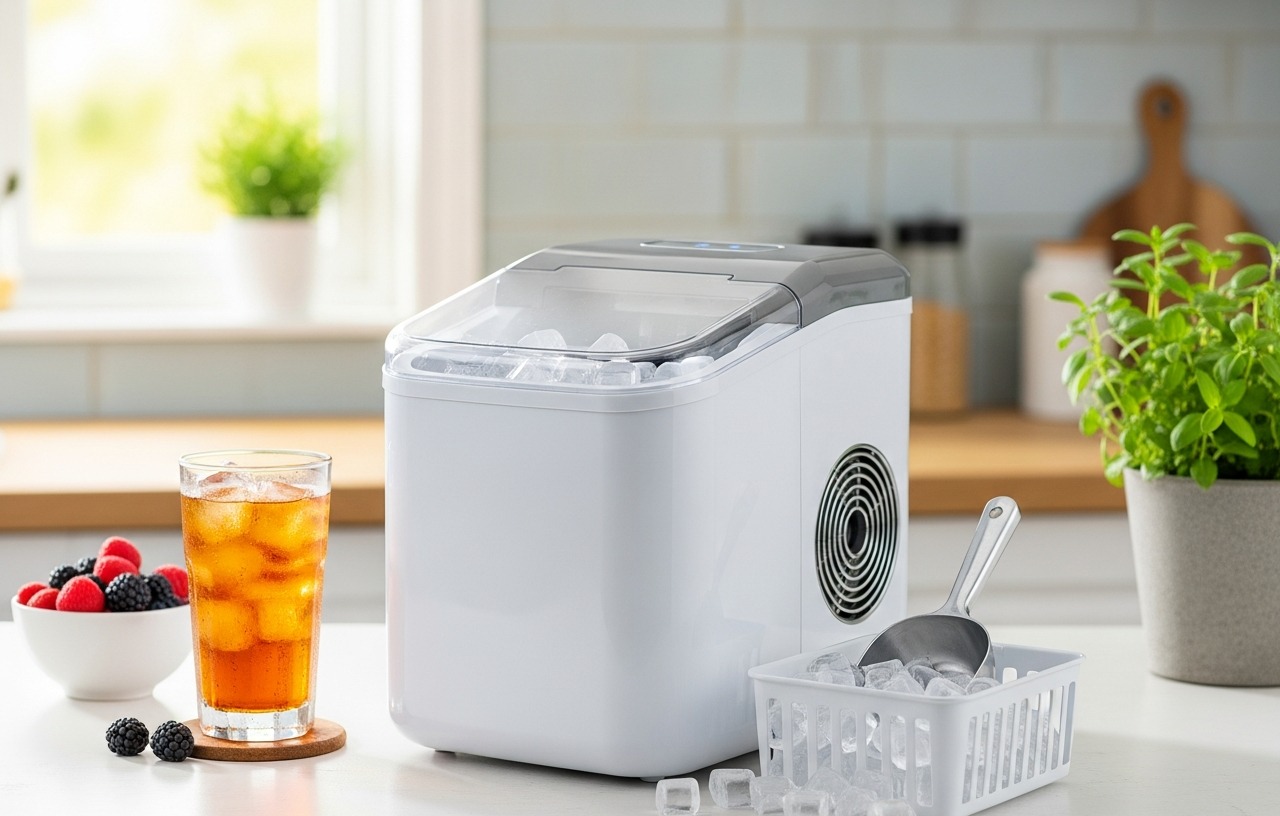
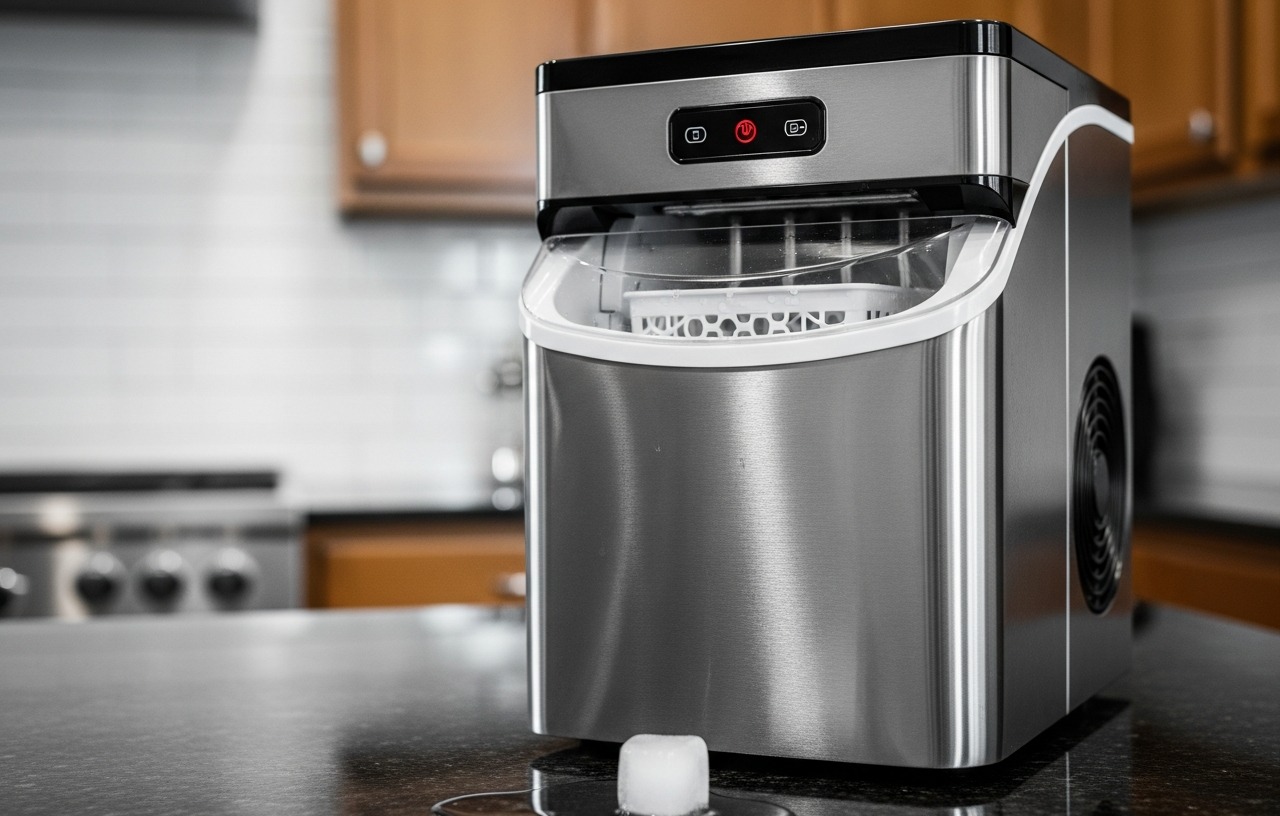
Portable ice makers, also known as countertop ice makers, operate on the fundamental principles of refrigeration. These compact appliances are designed for convenience, allowing users to produce ice on demand without needing a direct connection to a water line. Understanding how they function involves examining their internal components and the thermodynamic processes at play. Most units can produce a first batch of ice in 6 to 13 minutes and have daily capacities ranging from 26 to 45 pounds.
The Refrigeration Cycle in Action
At the heart of every portable ice maker is a vapor-compression refrigeration cycle. This cycle uses a special fluid, called a refrigerant, to transfer heat from one place to another. The main components involved are:
- Compressor: This is the "pump" of the system. It pressurizes the refrigerant gas, increasing its temperature and pressure.
- Condenser: The hot, high-pressure refrigerant gas flows through the condenser coils. Here, it releases heat to the surrounding air, typically with the help of a fan, and condenses into a high-pressure liquid.
- Evaporator: This is the cold part of the system where ice is actually made. The high-pressure liquid refrigerant passes through an expansion valve (or capillary tube), which drastically reduces its pressure and temperature. It then enters the evaporator, which is essentially a freezing plate or mold. As the cold refrigerant absorbs heat from the water dripped onto the plate, it evaporates back into a low-pressure gas. This process chills the plate to below freezing.
- Water Pump: A small pump circulates water from the reservoir to the evaporator plate.
The refrigerant continuously cycles through these stages, absorbing heat from the water to freeze it and then releasing that heat into the room. Water from the reservoir is pumped onto the surface of this plate. Because the plate is kept at a temperature well below freezing (typically between -10°F and -20°F, or -23°C and -29°C), the water droplets that come into contact with it freeze rapidly.
As more water freezes onto the plate, ice cubes begin to form. The shape of the ice cubes is determined by the design of the evaporator. Many countertop ice makers use a series of hollow tubes or indentations on the plate. As water freezes around these, it forms characteristic crescent-shaped or nugget-style ice.
When a sufficient thickness of ice has accumulated on the plate, a sensor detects this. The refrigeration cycle then temporarily reverses or shifts its focus. A small heating element might warm the evaporator plate slightly, or the flow of refrigerant is altered. This slight warming causes the ice cubes to detach from the plate and fall.
The detached ice cubes then drop into a collection bin located below the evaporator. A mechanism, often a simple chute or paddle, guides the ice into the bin. The machine then resets itself to begin the next freezing cycle.
The Water Reservoir and Dispensing System
Portable ice makers rely on a built-in water reservoir. Users manually fill this reservoir with fresh water. The capacity of this reservoir varies by model, typically ranging from 2 to 3 liters. This volume dictates how many ice-making cycles can occur before a refill is needed.
A small submersible pump within the reservoir draws water up to the evaporator plate. This pump is activated only during the ice-making cycle. The water flows over the plate, freezing a portion of it. Any excess water that doesn't freeze is typically allowed to drip back into the reservoir, conserving water and energy. This is a key difference from refrigerator ice makers that may have a direct water line connection and a more complex water filtration system.
Ice Size Selection
Many portable ice makers offer the user the ability to select the desired ice cube size, often with two or three settings (e.g., small, medium, large). This selection influences the duration of the freezing cycle. Smaller ice cubes freeze faster, meaning a new batch can be produced more quickly. Larger ice cubes require a longer freezing time to reach the desired thickness and density.
The size selection is typically controlled by the machine's internal timer and sensor system. It adjusts the amount of time the evaporator plate remains at freezing temperatures before initiating the ice ejection phase. For instance, a "small" setting might run the freezing cycle for 6 minutes, while a "large" setting might extend it to 10 minutes.
The Ice Storage Bin and Indicator Lights
The ice produced falls into an insulated storage bin. This bin is not a freezer; it does not have its own cooling system. Its primary purpose is to hold the ice until it can be used or transferred to a separate freezer. Because the bin is insulated, it helps to slow the melting process, but the ice will eventually melt back into water if left for extended periods.
Most units include indicator lights that signal important operational statuses. Common indicators include:
- Add Water: Alerts the user when the reservoir is running low and needs refilling.
- Ice Full: Notifies the user when the storage bin is full and no more ice can be produced until some is removed.
- Power/On-Off: Indicates the unit is powered on or off.
- Ice Size: May indicate the selected ice cube size.
These indicators help manage the ice-making process efficiently. For example, if the "Ice Full" light is on, the machine will stop producing ice to prevent water overflow. Similarly, if the "Add Water" light illuminates, the pump will cease operation to avoid running dry.
Maintenance and Cleaning for Optimal Performance
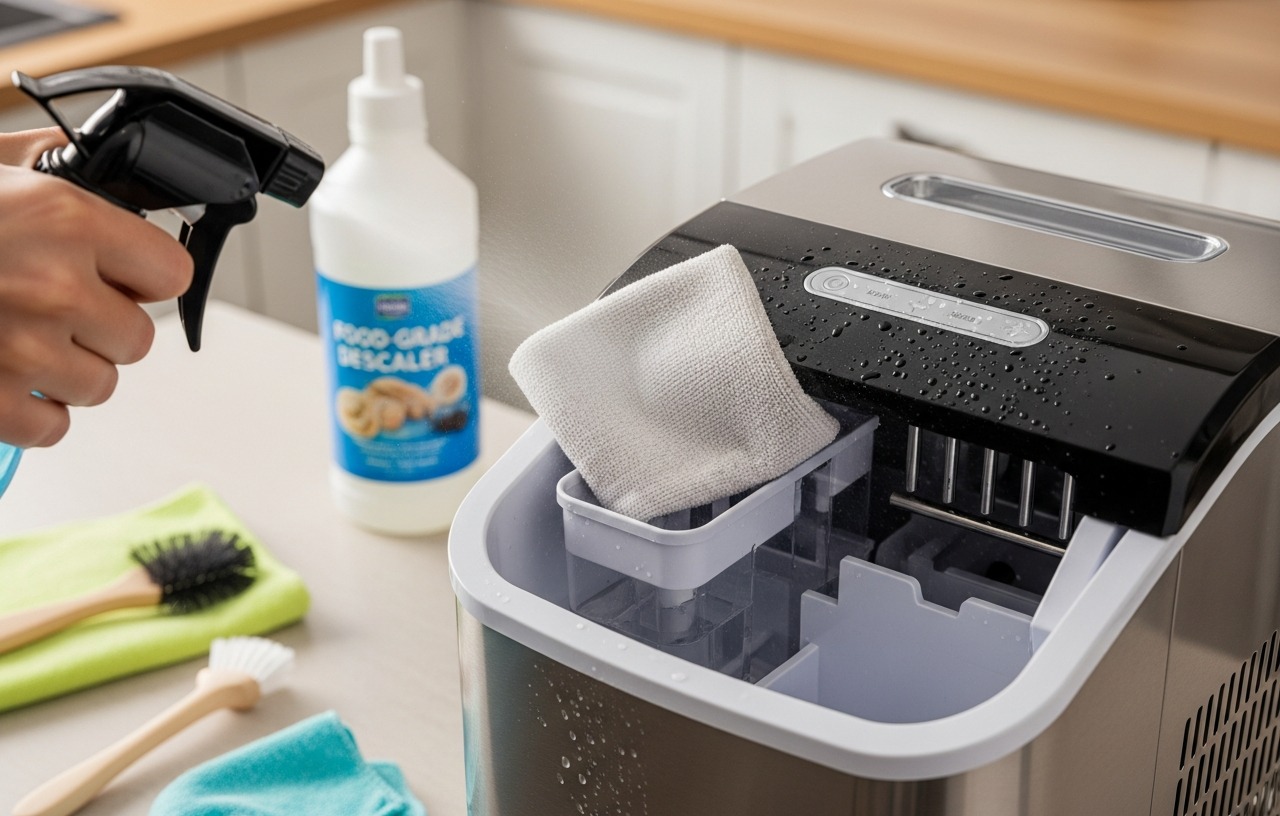
Like any appliance, portable ice makers require regular maintenance to function correctly and to prevent the growth of bacteria or mold. The water reservoir and ice bin are prone to mineral buildup and can become breeding grounds for microorganisms if not cleaned regularly.
Manufacturers typically recommend cleaning the ice maker every few weeks, depending on usage and water hardness. The process usually involves draining the reservoir, washing the removable parts (like the ice bin and scoop) with mild soap and water, and running a cleaning cycle. Some models have a dedicated "Clean" function that circulates a cleaning solution (often a mixture of water and vinegar or a specialized ice maker cleaner). This cleaning solution flushes through the water lines and evaporator plate to remove internal residue.
Proper cleaning is essential for both hygiene and the longevity of the machine. Mineral deposits can clog water lines or interfere with the sensors, leading to operational issues such as the machine not making ice or not sensing when the bin is full. For a detailed guide, check out how to clean a countertop ice maker.
Common Issues and Troubleshooting
Despite their relatively simple operation, portable ice makers can encounter problems. Understanding the common issues can help in troubleshooting.
One frequent problem is the machine not producing ice at all. This can stem from several causes: the water reservoir might be empty or the "Add Water" sensor is blocked; the water pump may be faulty; or the refrigeration system itself could have an issue, such as a refrigerant leak or a malfunctioning compressor. These issues can sometimes be resolved by ensuring the unit is level, has adequate ventilation, and is clean. For more in depth fixes, refer to articles on countertop ice maker not making ice fixes.
Another common symptom is slow ice production or small ice cubes. This might be due to the ambient room temperature being too high, which reduces the efficiency of the condenser's heat release. It could also indicate that the "Ice Full" sensor is dirty or obstructed, causing the machine to stop prematurely. Inadequate water flow due to a partially clogged pump or tubing can also result in smaller ice formation.
Some users experience issues with the ice melting too quickly in the bin. As mentioned, the storage bin is not refrigerated. If the ambient temperature is high, or if the machine produces ice at a slower rate than it melts, the ice will eventually turn back into water. Transferring the ice to a conventional freezer is the best solution for long term storage.
The overall design of these units, while convenient, means they are generally less robust than built-in refrigerator ice makers. Repairing them can sometimes be more costly than replacing the unit, especially for more complex mechanical failures. Information on repair costs can be found in articles discussing ice maker repair costs.