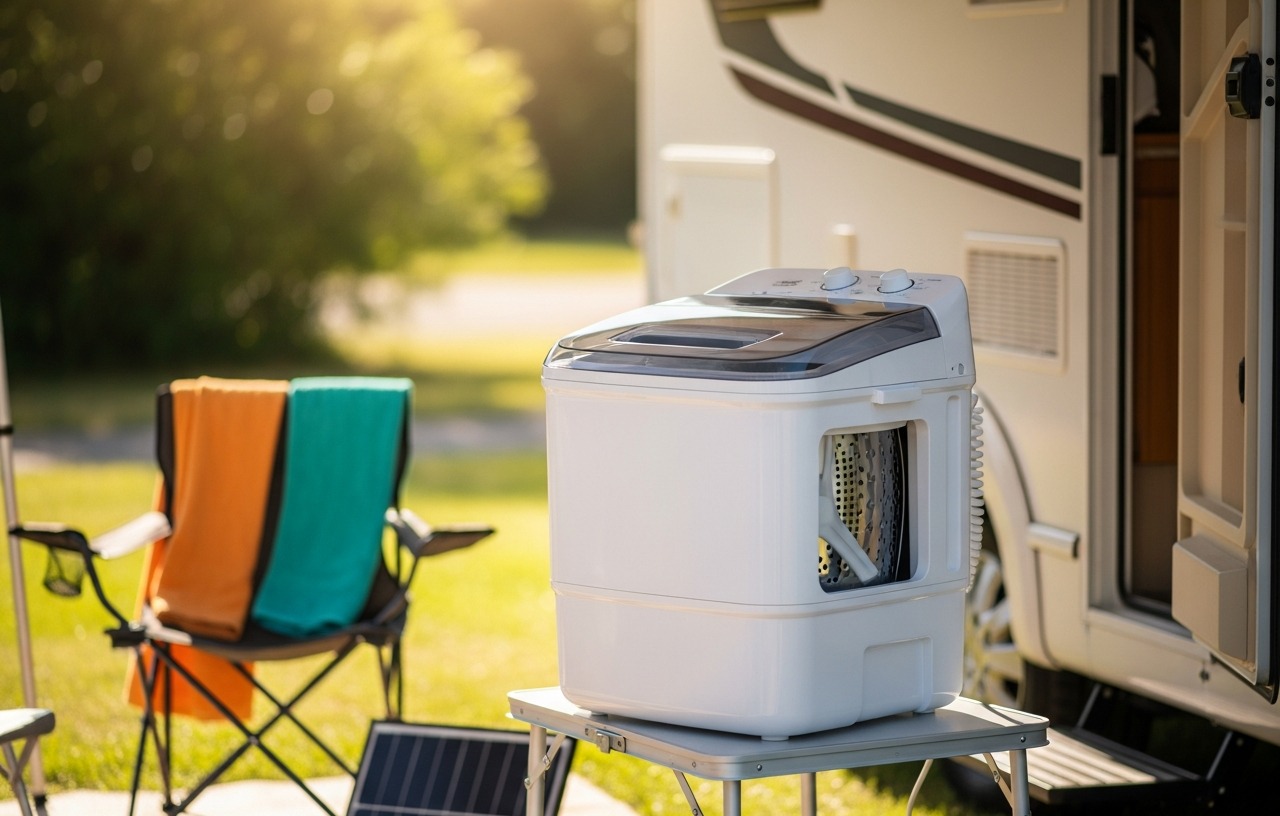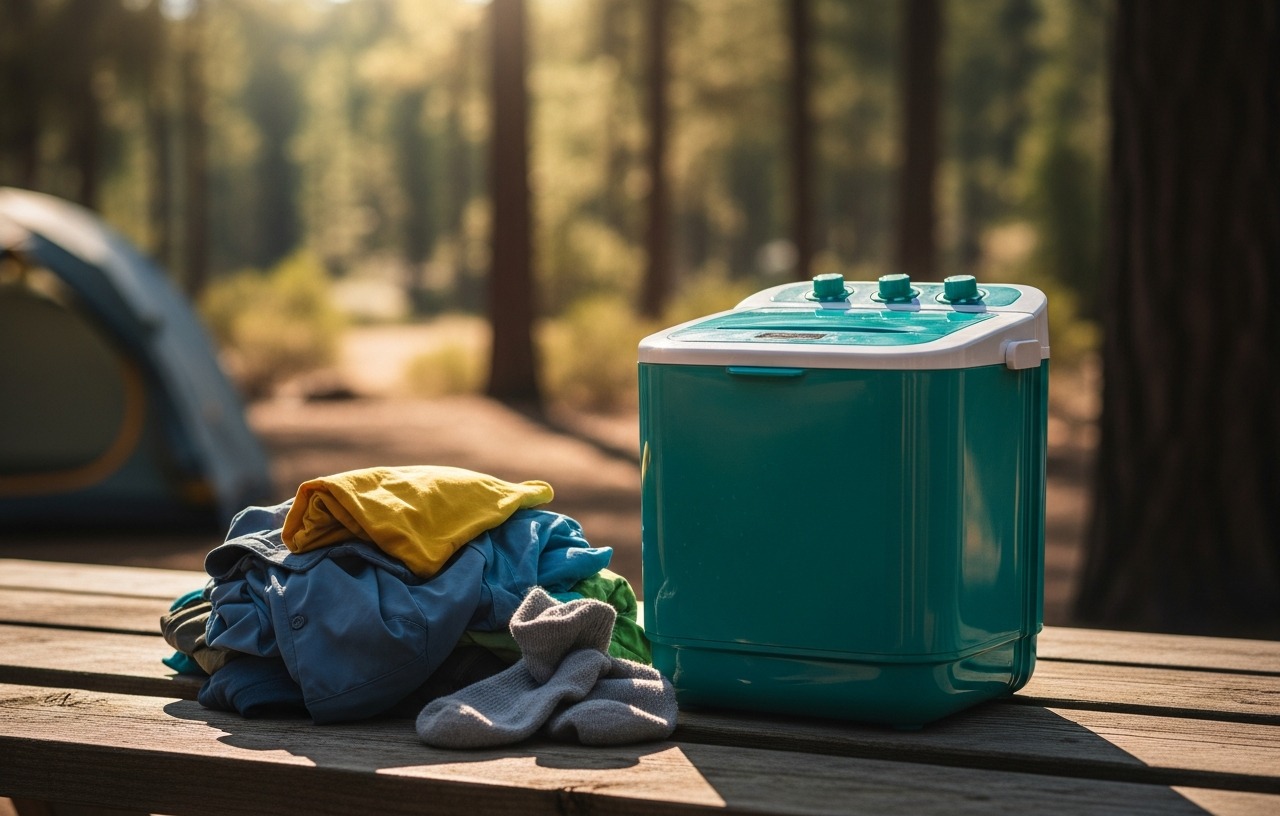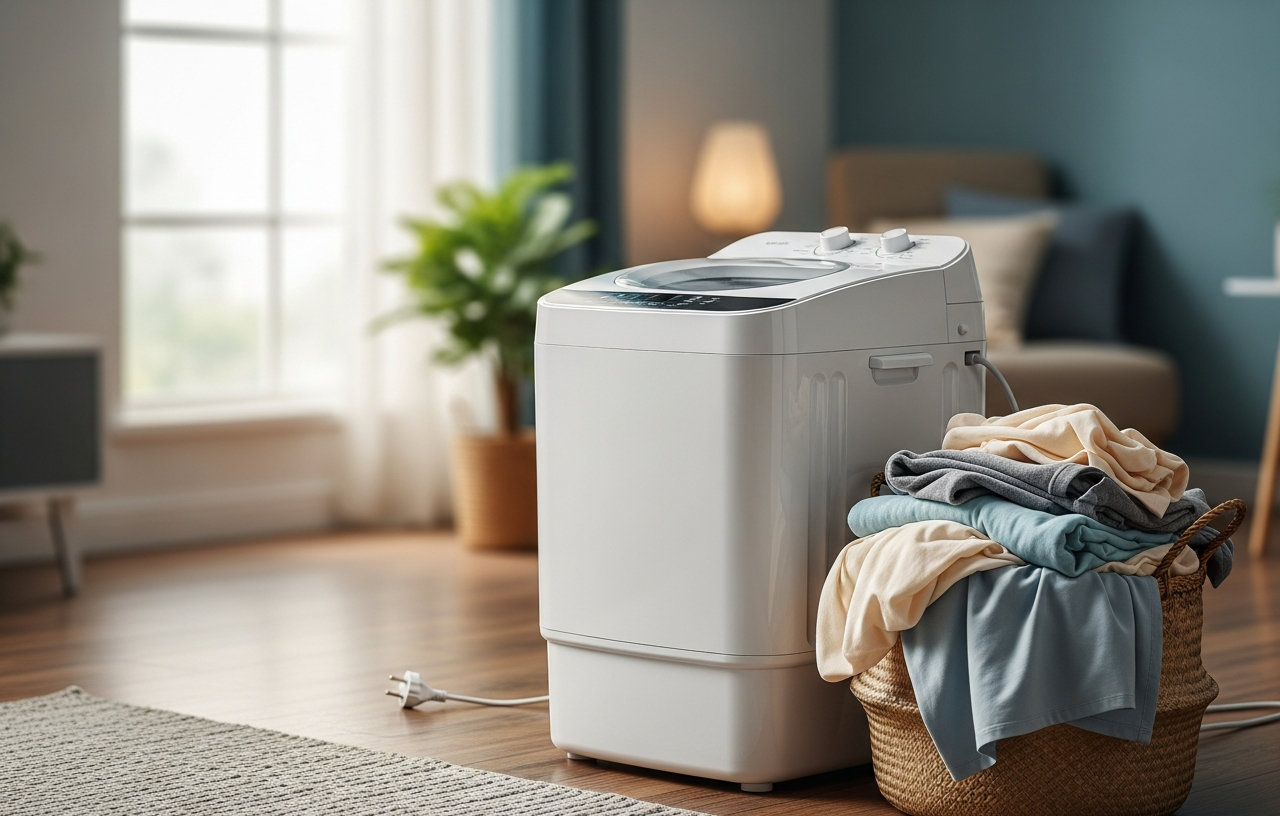
Understanding the full financial impact of a portable washing machine goes beyond its purchase price. The ongoing cost of running these compact appliances, encompassing electricity, water, and detergent, typically ranges from $0.25 to $0.50 per load. For someone doing laundry two to three times a week, this translates to a monthly expense of $10 to $20. While these machines offer convenience for apartment dwellers, college students, and RV enthusiasts, knowing the operational costs helps manage your budget effectively.
Understanding Portable Washing Machine Running Costs
Portable washing machines are smaller and often more energy-efficient than full-sized models. Their compact design means they use less water and, in many cases, less electricity per cycle. However, their smaller capacity might mean more frequent loads for the same amount of laundry, which can balance out some of the per-load savings.
Electricity Consumption and Cost
Portable washing machines draw significantly less power than their larger counterparts. Most models operate between 150 and 300 watts during the wash cycle and can peak slightly higher during the spin cycle. A typical wash cycle lasts between 30 and 60 minutes.
To calculate electricity cost, you need the appliance's wattage, the duration of use, and your local electricity rate. Electricity rates in the United States vary widely, from around $0.10 to $0.30 per kilowatt-hour (kWh). We will use a national average of $0.15 per kWh for our calculations.
Consider a portable washing machine that uses an average of 200 watts (0.2 kW) during a 45-minute (0.75-hour) wash cycle. The energy consumed per load is 0.2 kW multiplied by 0.75 hours, which equals 0.15 kWh. At an electricity rate of $0.15 per kWh, the cost per load is $0.15 multiplied by 0.15 kWh, resulting in approximately $0.0225 per load. Even if the machine uses 300 watts (0.3 kW) for a full hour, the cost would be 0.3 kWh multiplied by $0.15/kWh, equaling $0.045 per load. Electricity is a minor component of the overall running cost.
Water Usage and Expenses
Water consumption is another key factor. This is considerably less than the 20 to 30 gallons a traditional top-loader might use.
Water utility rates also vary by location and often include a tiered pricing structure or a flat service fee. For our estimate, we will use an average water cost of $3.50 per 1,000 gallons. This translates to $0.0035 per gallon.
If your portable washing machine uses 8 gallons per load, the water cost per load would be 8 gallons multiplied by $0.0035 per gallon, which is $0.028. If it uses 12 gallons, the cost rises to $0.042 per load. Using cold water for washes helps further, as it eliminates the energy cost associated with heating water.
Detergent and Other Supplies
Detergent, fabric softener, and other laundry additives represent a significant portion of the ongoing costs. The price of detergent varies based on brand, type (liquid, powder, pods), and concentration. A single load of laundry detergent can cost anywhere from $0.20 to $0.40. Using concentrated or high-efficiency (HE) detergents, specifically formulated for low-water-volume machines, can offer better cleaning with less product, potentially saving money over time.
Total Monthly and Annual Operating Costs
Combining these factors gives a clearer picture of total running costs. Let's assume an average scenario:
- Electricity: $0.03 per load
- Water: $0.03 per load
- Detergent: $0.30 per load
- Total per load: $0.36
If you do laundry twice a week, that is 8 loads per month. Your monthly running cost would be approximately $0.36 multiplied by 8 loads, totaling around $2.88. For someone doing laundry three times a week (12 loads per month), the cost would be $0.36 multiplied by 12 loads, around $4.32. This does not include the initial purchase price of the machine, which typically ranges from $150 to $350.
These figures demonstrate that the actual utility cost of running a portable washing machine is quite low. The major variable and biggest expense per load often comes from the detergent itself.
When Repairs Are Needed: A Cost Breakdown
Like any appliance, portable washing machines can experience malfunctions. Understanding potential repair costs helps you decide if fixing the machine is more economical than replacing it. A new portable washing machine generally costs between $150 and $350. Major failures on a machine at the lower end of that price range often do not warrant professional repair.
DIY Repair Scenario: Replacing a Drain Pump
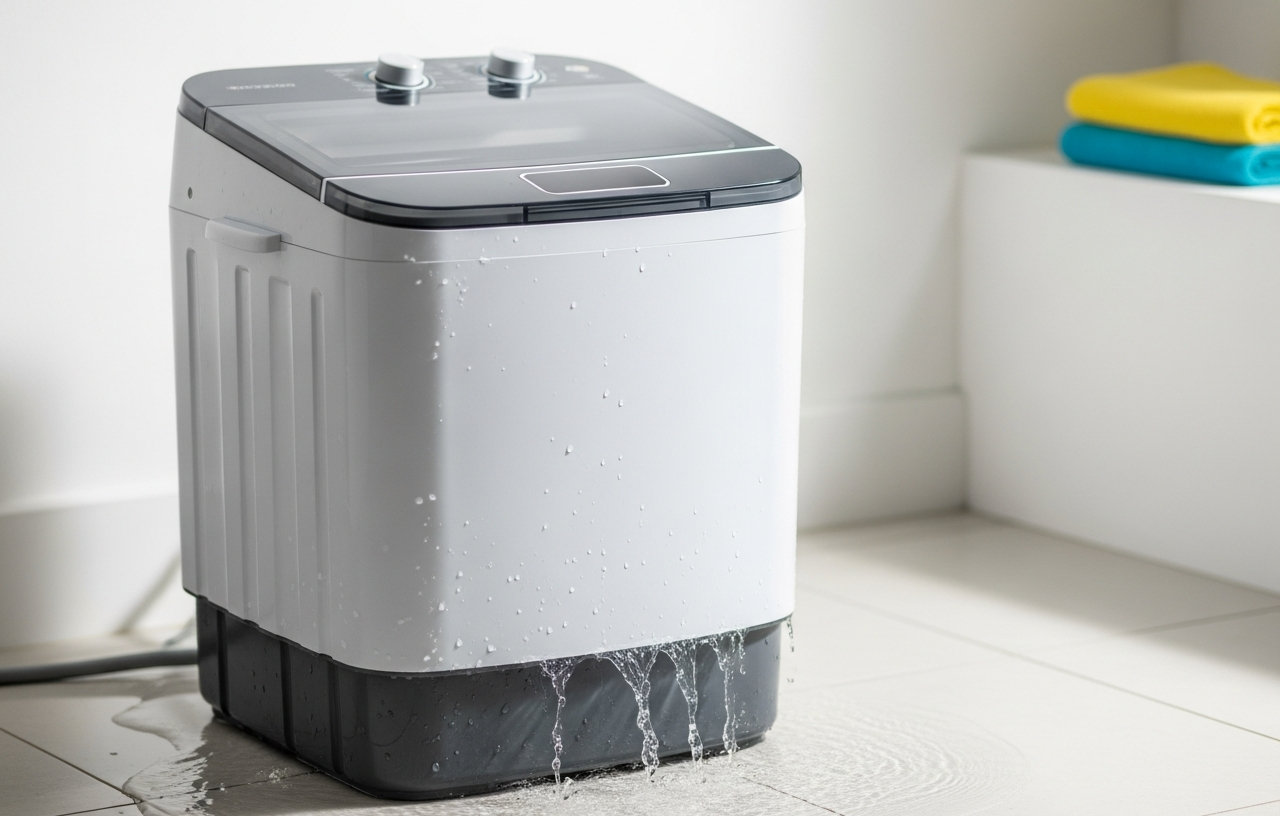
A common issue with washing machines, including portable models, is a faulty drain pump. The machine may fill with water but fail to drain, or it might make unusual noises during the drain cycle. Replacing a drain pump is a repair many homeowners can attempt with basic tools and a little patience.
- Part Cost: A new drain pump for a portable washing machine typically costs between $25 and $60 when purchased online from appliance parts retailers or sites like Amazon. Buying the part from a local hardware store or appliance parts dealer might push the cost to $40 to $80.
- Tools: You will generally need a screwdriver (Phillips and flathead), a pair of pliers, and possibly a bucket to catch residual water. These tools are often already owned, so there is no additional cost.
- Time Investment: For someone with basic mechanical aptitude, replacing a drain pump usually takes 1 to 2 hours. Online tutorials, often found on YouTube, provide step by step guidance for many common models.
The total DIY cost for this repair would be $25 to $80, depending on where you source the part. This represents a substantial saving compared to professional services.
Professional Repair Costs
If you are uncomfortable with DIY repairs, a professional appliance technician can fix the issue. However, this comes with a higher price tag.
- Service Call Fee: Most technicians charge a diagnostic or service call fee ranging from $75 to $150. This fee often applies even if you decide not to proceed with the repair.
- Labor: Labor rates for appliance repair vary from $80 to $150 per hour. A drain pump replacement might take 1 to 1.5 hours.
- Part Markup: Technicians typically mark up the cost of parts. A drain pump that costs $40 online might be billed to you for $60 to $100.
Combining these, a professional repair for a drain pump could cost: $75 (service fee) + $80 (1 hour labor) + $60 (marked-up part) = $215 at the lower end. At the higher end, it could be $150 (service fee) + $225 (1.5 hours labor at $150/hour) + $100 (part) = $475. If your portable washing machine cost $180 new and needs a $250 professional repair, it makes more financial sense to buy a new one. However, if the machine cost $300 and the repair is a simple, inexpensive DIY fix, spending $50 on a part is a wise choice.
For repairs like a drain pump, which are relatively common and have clear instructions available, DIY is often the most cost effective option. If the machine is still under warranty, contact the manufacturer first. For more complex electrical issues or internal component failures, professional help is generally recommended.
Strategies to Reduce Portable Washing Machine Running Costs
Minimizing the running costs of your portable washing machine involves a few smart habits and choices.
- Wash Full Loads: Always wait until you have a full load of laundry. Running partial loads uses the same amount of water and electricity as a full load, effectively doubling your per-item cost.
- Use Cold Water: Most portable washing machines offer cold water wash cycles. Heating water consumes significant energy. Using cold water whenever possible drastically cuts down on electricity expenses, as the machine does not need to activate its internal heating element or rely on your home's hot water heater.
- Use HE Detergent: High-efficiency (HE) detergents are formulated to work effectively with less water, producing fewer suds. This is ideal for portable washing machines, which use less water. Using too much regular detergent can lead to excessive suds, poor rinsing, and even machine damage over time.
- Regular Maintenance: Keep your machine clean. Regularly clean the lint filter and check hoses for blockages. Proper maintenance helps the machine run efficiently and prevents costly repairs down the line.
- Spin Cycle Efficiency: Maximize the spin cycle. A good spin cycle removes more water from clothes, reducing drying time whether you hang clothes to dry or use a separate dryer. This indirectly saves energy.
By adopting these practices, you can make sure your portable washing machine operates as cost effectively as possible, stretching your budget further. These small changes add up over time, providing noticeable savings on your utility bills and overall laundry expenses.
If you are considering a portable washing machine for an RV, you might find more information in The Best Portable Washing Machines for RV Living & Camping.