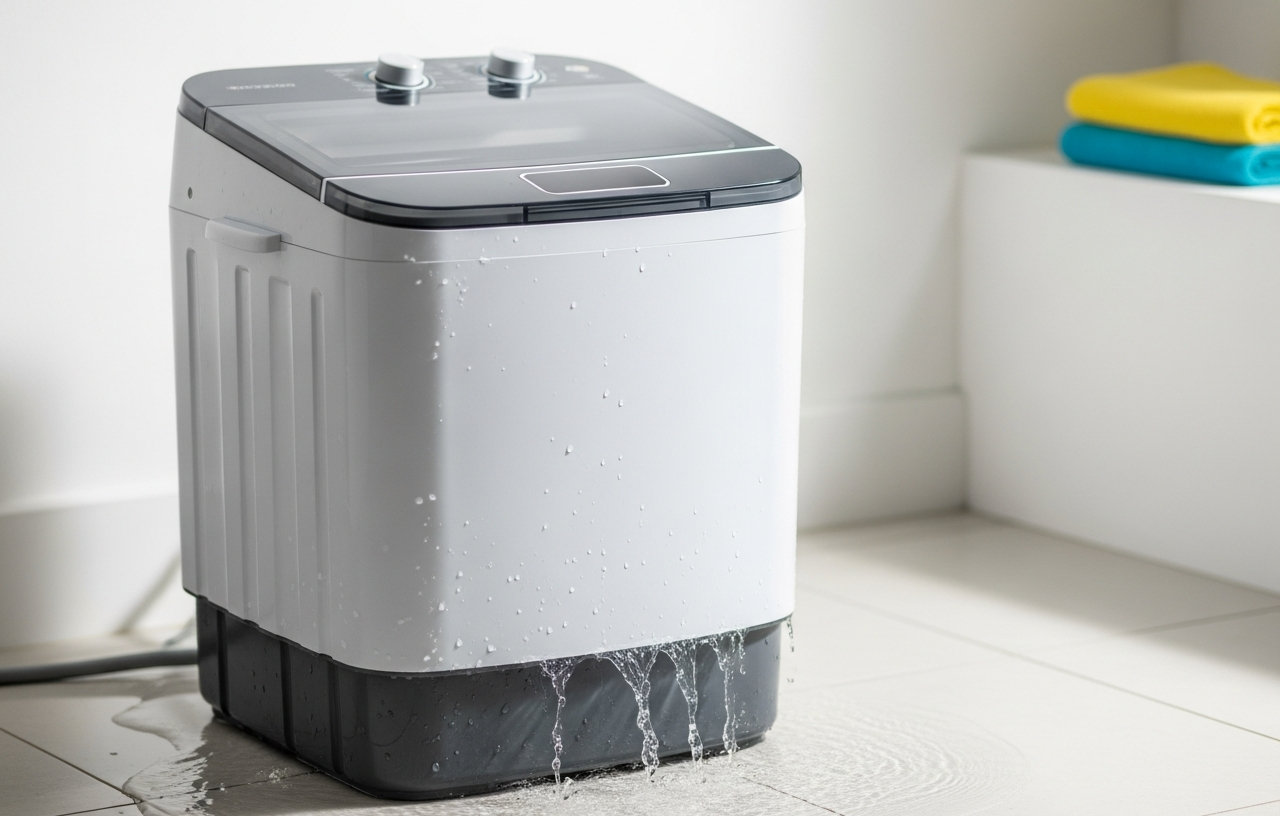
Water pooling around your portable washing machine indicates a problem, which can range from simple hose adjustments to more complex internal component failures. Identifying the exact source of a leak can feel daunting. This guide provides a systematic approach to troubleshooting common portable washing machine leaks, helping you diagnose and often fix the issue yourself.
Before you begin any inspection or repair, always unplug the portable washing machine from its power source. Turn off the water supply to the machine by closing the spigots connected to the inlet hoses. Clear the area around the machine so you have enough space to work and observe.
Common Causes of Portable Washing Machine Leaks
Overloading or Excessive Suds
One of the most frequent reasons for a portable washing machine leaking is simply overloading the tub or using too much detergent. Portable washing machines, like the popular Haier HLP21N or Magic Chef portable washer models, have smaller capacities than full-sized units. Filling the tub beyond its recommended load line causes water to slosh over the top during agitation or spin cycles. Excessive detergent creates too many suds, which can also overflow the tub or even bubble out through the detergent dispenser.
Symptoms: Water visibly overflows from the top of the tub or out of the detergent dispenser during a wash cycle. Suds may be present on the floor around the machine. This type of leak typically occurs during the wash or rinse phases.
Diagnosis: Observe the machine during a cycle. If water or suds spill over the top, you have an overloading or over-sudsing issue. Check the detergent instructions for dosage specific to high-efficiency (HE) machines, as most portable washers are HE. Use less detergent, especially if you have soft water.
Fix: Reduce your laundry load size. Use only HE detergent and measure carefully, often half the amount recommended for a full-sized machine is sufficient. This fix costs nothing.
Loose or Damaged Hoses
Hoses are critical components for both water input and drainage. They are also common culprits when a portable washing machine is leaking. Portable washing machines use two main types of hoses: inlet hoses (for hot and cold water supply) and a drain hose (for expelling dirty water).
Inlet Hoses
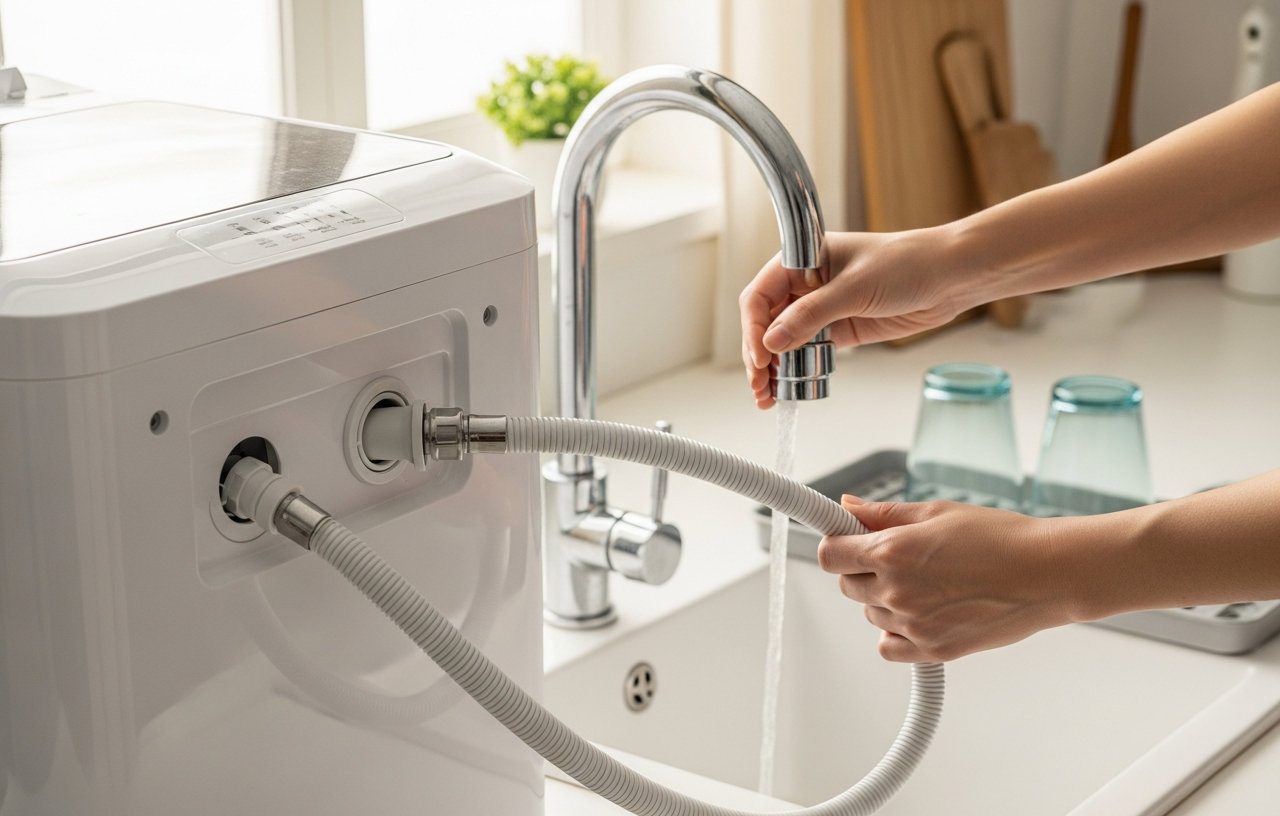
The inlet hoses connect the portable washer to your faucet. Over time, these connections can loosen due to vibrations from the machine, or the rubber washers inside the connectors can wear out. A crack in the hose itself, though less common, can also cause a leak.
Symptoms: Water drips or streams from the back of the machine, near the faucet connection, or where the hoses attach to the washer's inlet valves. You might see a portable washer leaking from bottom if water travels down the hose and collects underneath.
Diagnosis: Visually inspect both inlet hoses from end to end. Feel along the length of the hoses for dampness. Check the tightness of the connections at both the faucet and the washing machine. Look for any visible cracks, bulges, or signs of wear on the hoses.
Fix: Tighten any loose connections by hand, then use a wrench for a quarter-turn more, being careful not to overtighten. If the leak persists, replace the rubber washers inside the hose connectors. If the hose itself is cracked, replace it entirely. New inlet hoses typically cost between $10 and $30 per pair. A professional might charge $100 to $200 to diagnose and replace hoses.
Drain Hose
The drain hose carries wastewater out of the machine. It often hooks over a sink or connects to a permanent drain. If the drain hose is not properly secured, has a crack, or is kinked, it can cause significant leaks. A clogged drain hose can also lead to water backing up and overflowing.
Symptoms: Water collects on the floor, especially during the drain or spin cycle. You may notice the portable washing machine leaking from bottom if the drain hose is damaged underneath or poorly routed, allowing water to drip directly to the floor.
Diagnosis: Examine the entire length of the drain hose for kinks, cracks, or punctures. Make sure it is securely positioned in the sink or drain. Check for blockages by carefully removing the hose from its connection (ensure the machine is empty) and inspecting the opening. Sometimes lint or small objects can create a partial blockage.
Fix: Straighten any kinks. If the hose is cracked or damaged, replace it. A universal drain hose costs $15 to $35. Make sure the drain hose is properly secured. If you suspect a clog, try flushing the hose with water or using a drain snake if accessible. If this component fails or its seals wear out, you will often find your portable washing machine leaking from bottom. This is a common point of failure for many compact appliances, including specific models like the Haier HLP21N, which sometimes show issues with their pump assemblies after several years of use.
Symptoms: Water leaks from underneath the machine, particularly during the drain or spin cycle. You might also notice the machine struggling to drain or not draining completely.
Diagnosis: Accessing the drain pump usually requires tilting the machine or removing a rear or bottom panel. With the machine unplugged, inspect the pump for visible cracks or corrosion. Check the connections where hoses attach to the pump for looseness or wear. A common sign of a failing pump seal is water dripping directly from the pump housing itself.
Fix: If there is a visible clog, clear it. If the leak is from a loose connection, tighten it. If the pump housing is cracked or the seal is faulty, the pump assembly usually needs replacement. A new drain pump for a portable washing machine can cost $30 to $100. Replacing it yourself involves some disassembly, but it is manageable for those comfortable with basic tools. A professional repair for a drain pump typically ranges from $150 to $300, including parts and labor.
Tub Seal or Bearings Failure
The tub seal prevents water from leaking out of the wash tub where the agitator shaft passes through. Below the tub seal are the bearings, which allow the inner tub to spin smoothly. If the tub seal fails, water can seep past it, often damaging the bearings and causing a leak that appears as a portable washing machine leaking from bottom.
Symptoms: Significant water leakage from the very bottom center of the machine, especially during agitation and spin cycles. You might also hear grinding or squealing noises during the spin cycle, indicating worn bearings.
Diagnosis: This is a more involved diagnosis. You will likely need to remove the top and front panels to access the tub and agitator. Look for water stains or rust marks directly beneath the tub and around the agitator shaft. If water is dripping from this area, the tub seal is compromised. Damaged bearings will often show rust or corrosion around the shaft as well.
Fix: Replacing a tub seal and bearings is a complex repair, often requiring significant disassembly of the machine. The parts themselves (seal, bearings) might cost $20 to $70. However, the labor involved is extensive. For many portable washing machines, especially those under $300, the cost of a professional repair (easily $200 to $400 or more) might approach or exceed the cost of a new unit. This repair is best left to experienced DIYers or a professional, but consider if replacement is more economical.
Detergent Dispenser or Door Seal Problems
Some portable washing machines have a pull-out detergent dispenser or a front-loading door with a rubber gasket. This leak typically occurs during the wash or rinse cycles.
Diagnosis: For a detergent dispenser, check if it is fully closed and free of detergent buildup that could prevent a tight seal. For a door seal, inspect the rubber gasket for cracks, tears, or mildew buildup. Make sure no clothes are caught in the seal when the door is closed.
Fix: Clean the detergent dispenser thoroughly with warm, soapy water and a brush. For the door seal, clean it with a mild detergent and check for obstructions. If the seal is damaged, it needs replacement. A new door seal (gasket) can cost $15 to $40. Replacing a door seal on a compact front-loader is a moderately difficult DIY task, or a professional can do it for $80 to $150.
Cracked Tub or Casing
Though less common, a severe impact or manufacturing defect can lead to a crack in the inner or outer tub, or the machine's external casing. This type of damage can result in a persistent portable washing machine leaking from bottom, regardless of the cycle stage.
Symptoms: A continuous drip or steady leak from the bottom of the machine, even when it is not operating but has water in the tub. The leak may worsen during cycles.
Diagnosis: This requires careful visual inspection. Remove the back or bottom panel and look for visible cracks in the plastic tub components. Sometimes, a hairline crack is hard to spot. If you cannot find any other source, a cracked tub is a strong possibility.
Fix: Repairing a cracked tub is generally not feasible or cost effective for portable washing machines. The plastic material is difficult to patch reliably, and the integrity of the tub is critical. In most cases, if a tub or casing is cracked, replacing the entire portable washing machine is the recommended solution.
Water Level Sensor or Pressure Switch Malfunction
The water level sensor, or pressure switch, tells the machine how much water is in the tub. If this component malfunctions, the machine may overfill, leading to water overflowing the tub.
Symptoms: The tub fills with too much water, then overflows from the top. The machine might continue to fill even after reaching the appropriate level.
Diagnosis: This issue is harder to visually confirm without specialized tools. However, if the machine consistently overfills and then leaks from the top, the water level sensor is a likely culprit. Ensure no obstructions are in the pressure tube connecting the sensor to the tub.
Fix: Replacing a faulty water level sensor or pressure switch usually costs $20 to $60 for the part. This is a moderately easy DIY repair, typically involving unplugging a few wires and hoses and swapping out the part. A professional might charge $100 to $250 for this repair.
Faulty Water Inlet Valve
The water inlet valve controls the flow of water into the washing machine. If it malfunctions, it can allow water to seep into the tub even when the machine is off, or it may not close completely, leading to an overfill.
Symptoms: A slow, continuous drip of water into the tub even when the machine is off. If the machine overfills and overflows, the inlet valve could be stuck open.
Diagnosis: Disconnect the inlet hoses from the back of the machine. If water continues to drip from the machine's inlet ports even when the faucet is off (and the machine is unplugged), the valve is likely faulty. This is rare for portable units, which usually require the faucet to be turned on for water to enter.
Fix: A faulty inlet valve needs to be replaced. The part costs $20 to $70. This repair is similar in complexity to replacing a drain pump. A professional repair would be in the range of $100 to $200.
When to Call a Professional Appliance Repair Technician
Deciding whether to call a professional for your portable washing machine leaking issue often comes down to the cost of the repair versus the cost of a new unit. For minor issues like loose hoses, cleaning clogs, or even replacing a drain pump, a DIY approach is usually cost effective. Parts are relatively inexpensive, and the labor is manageable for many.
However, for more complex repairs, such as replacing a tub seal or bearings, the labor costs can quickly add up. Portable washing machines typically range from $150 to $400 new. If a professional repair estimate exceeds half the cost of a new machine, especially for an older unit, replacement often makes more financial sense. Consider the machine's age and overall condition. If it is already several years old and showing other signs of wear, a significant repair might only delay further issues. For more insights on appliance repair costs, you can review information on general ice maker repair costs, which often share similar labor considerations.
Preventing Future Leaks
Proactive maintenance can significantly reduce the likelihood of your portable washing machine leaking in the future. Always adhere to the manufacturer's guidelines for load size and detergent usage. Overloading is a common cause of stress on machine components and can lead to overflows. Use only high-efficiency (HE) detergent, as it produces fewer suds, which helps prevent over-sudsing leaks.
Regularly inspect your inlet and drain hoses for any signs of wear, cracks, or loose connections. Tighten connections periodically. Make sure the drain hose is not kinked or obstructed. Occasionally, cleaning the lint filter (if your model has one) can also prevent drainage issues that might lead to leaks. By taking these simple steps, you can extend the life of your portable washing machine and keep your laundry area dry.