Countertop Dishwasher Not Drying Dishes? Solutions for Spotless Results
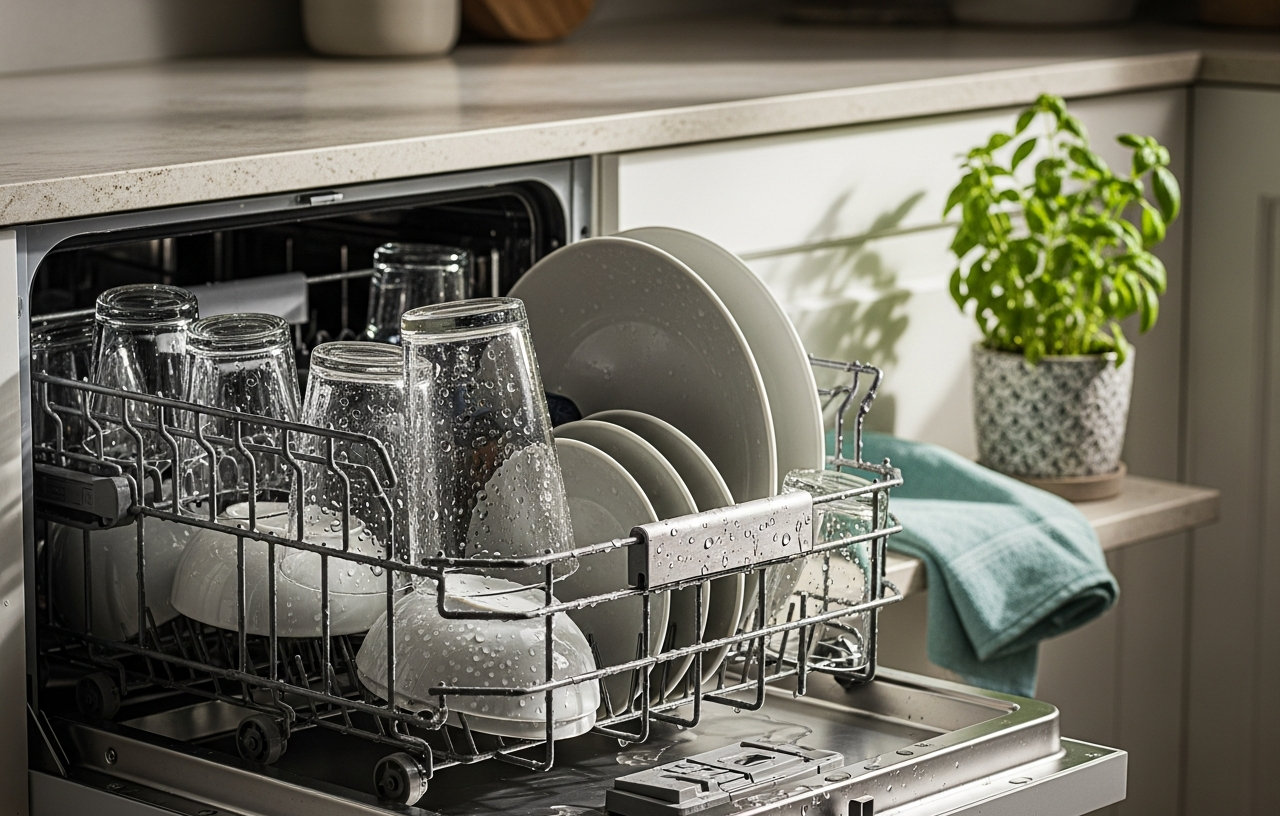
Many countertop dishwashers use condensation drying, where residual heat from the final rinse evaporates water, leaving dishes dry. This method is energy-efficient but relies on several factors working correctly. If your countertop dishwasher is leaving dishes wet or spotty, the problem is usually simple to diagnose and fix.
Troubleshooting involves checking common issues first. These range from simple user errors to minor maintenance needs. Rarely does a major component failure cause only drying problems.
1. Rinse Aid Dispenser is Empty or Low
The most frequent reason dishes remain wet or spotty is an empty or low rinse aid dispenser. Rinse aid reduces the surface tension of water, allowing it to sheet off dishes more effectively during the final rinse. This prevents water droplets from forming and drying as spots. It also helps with the condensation drying process common in many compact dishwashers.
Locate the rinse aid dispenser, typically a small compartment next to the detergent dispenser inside the dishwasher door. Open it and check the level. If it is low or empty, refill it with a quality rinse aid product. You will often see an indicator light or hear a chime when the rinse aid needs refilling.
For consistently dry and spot-free dishes, consider using a product like Finish Jet-Dry Dishwasher Rinse Aid. This product is specially designed to help water sheet off dishes, preventing spots and ensuring a better dry. It actively works to reduce surface tension and can significantly improve drying performance, especially in hard water areas. Many users report excellent results, reducing the need for hand-drying after a cycle completes.

- Finish Jet Dry Rinse Aid is dishwasher rinse aid product.
- WHAT IS RINSE AID. Tired of unloading a dishwasher full of wet and spotty dishes. The best dishwashing.
- Still seeing hard water marks and residue on your dishes. Finish Jet Dry is specially designed to help.
- SHINIER GLASSES and DISHES: Looking for the ultimate shine. Use Jet Dry to protect your glasses and get.
2. Improper Loading Techniques
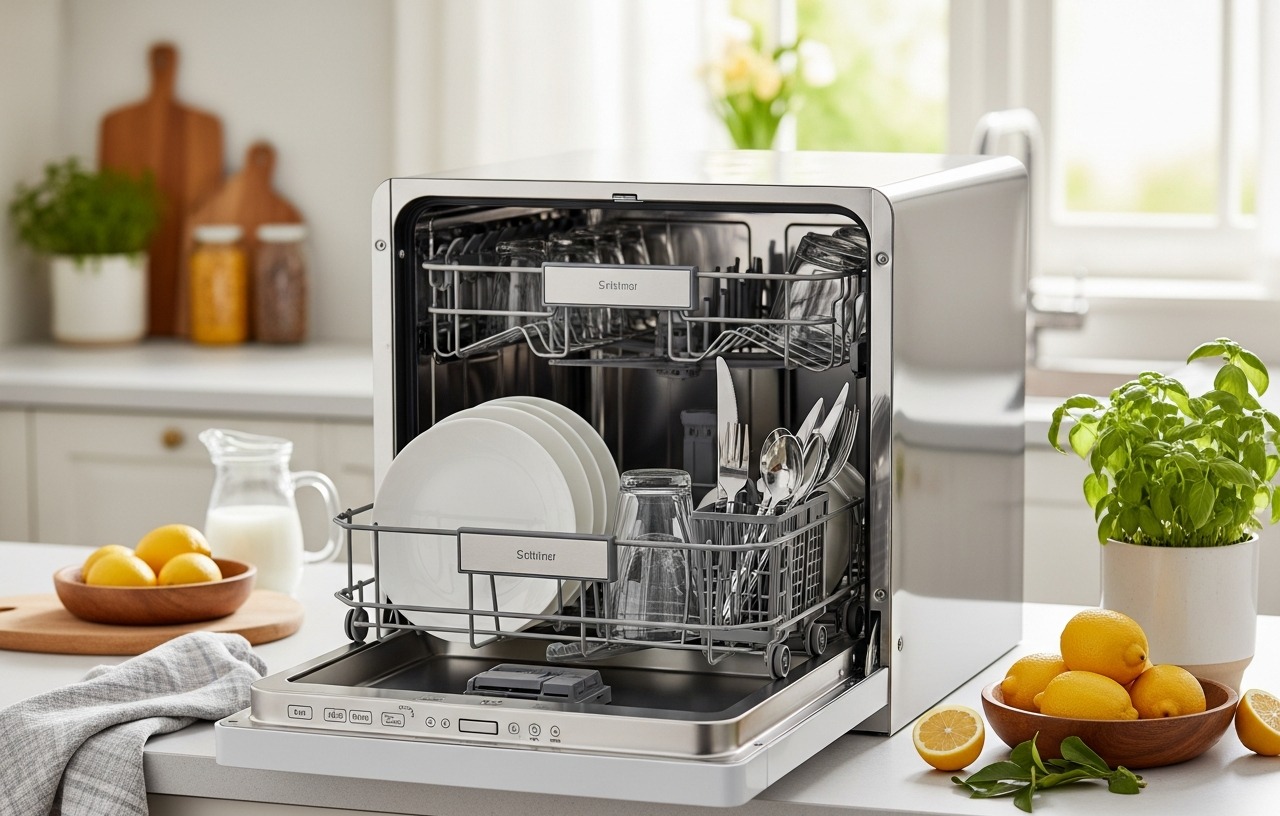
How you load your countertop dishwasher significantly impacts drying performance. Overcrowding blocks water and heat from reaching all dish surfaces. Dishes stacked too closely will trap water, preventing proper evaporation.
- Avoid Overloading: Leave space between dishes for water and hot air to circulate.
- Angle Dishes: Load bowls and plates at an angle to allow water to drain off.
- Separate Plastics: Plastic items often retain more water due to their lower thermal mass. Place them in the top rack where possible, and make sure they are not nested.
- Check Spray Arms: Make sure no tall items or utensils block the rotation of the spray arms. Blocked spray arms lead to poor rinsing and, consequently, poor drying.
Proper loading is a free and effective solution. It improves both washing and drying efficiency.
3. Incorrect Cycle Selection
Not all wash cycles include a heated dry phase, or they might use a less intensive drying method. Many countertop dishwashers have various cycles, some of which are designed for speed or energy savings and might skip or shorten the drying process.
- Select a Heated Dry Option: Choose a cycle that explicitly includes a heated dry or a more intensive drying phase. This is often labeled as "Heavy," "Sanitize," or "Pots & Pans."
- Check Your Manual: Refer to your dishwasher's user manual to understand what each cycle offers regarding drying. Some models have an optional "Extra Dry" or "Heated Dry" setting you need to select manually.
- Avoid "Quick" or "Eco" Cycles: These cycles prioritize speed or energy efficiency and often have minimal or no drying phase.
Taking an extra few minutes to select the right cycle can make a big difference.
4. Insufficient Water Temperature
Hot water is essential for effective cleaning and drying in a dishwasher. Countertop dishwashers rely on the residual heat from the hot final rinse to aid in condensation drying. If the incoming water is not hot enough, dishes will not heat sufficiently to facilitate proper drying.
- Hot Water Heater Setting: Make sure your home's hot water heater is set to at least 120°F (49°C). For optimal dishwasher performance, 130°F (54°C) is ideal.
- Run Hot Water Before Starting: Before starting the dishwasher, run the hot water at your kitchen sink for a minute or two. This clears cold water from the pipes and ensures the dishwasher fills with hot water immediately.
A simple temperature check can prevent many drying frustrations.
5. Clogged Filters or Spray Arms
A dirty filter or clogged spray arm nozzles can prevent proper water circulation and rinsing. This leaves food particles on dishes and inhibits effective water drainage, leading to wet dishes. Most countertop dishwashers have a filter system at the bottom of the tub.
- Clean the Filter: Remove and clean the dishwasher filter regularly, typically once a month or as recommended by the manufacturer. Rinse it under running water to remove food debris. Some filters require a soft brush.
- Inspect Spray Arms: Check the spray arm nozzles for any blockages. Use a toothpick or small wire to clear any debris from the tiny holes.
Cleaning these components is part of routine maintenance and will improve both washing and drying performance.
6. Poor Drainage Issues
If water remains in the bottom of the dishwasher after a cycle, dishes will not dry. This indicates a drainage problem. While less common in countertop models than full-size units, it can still occur.
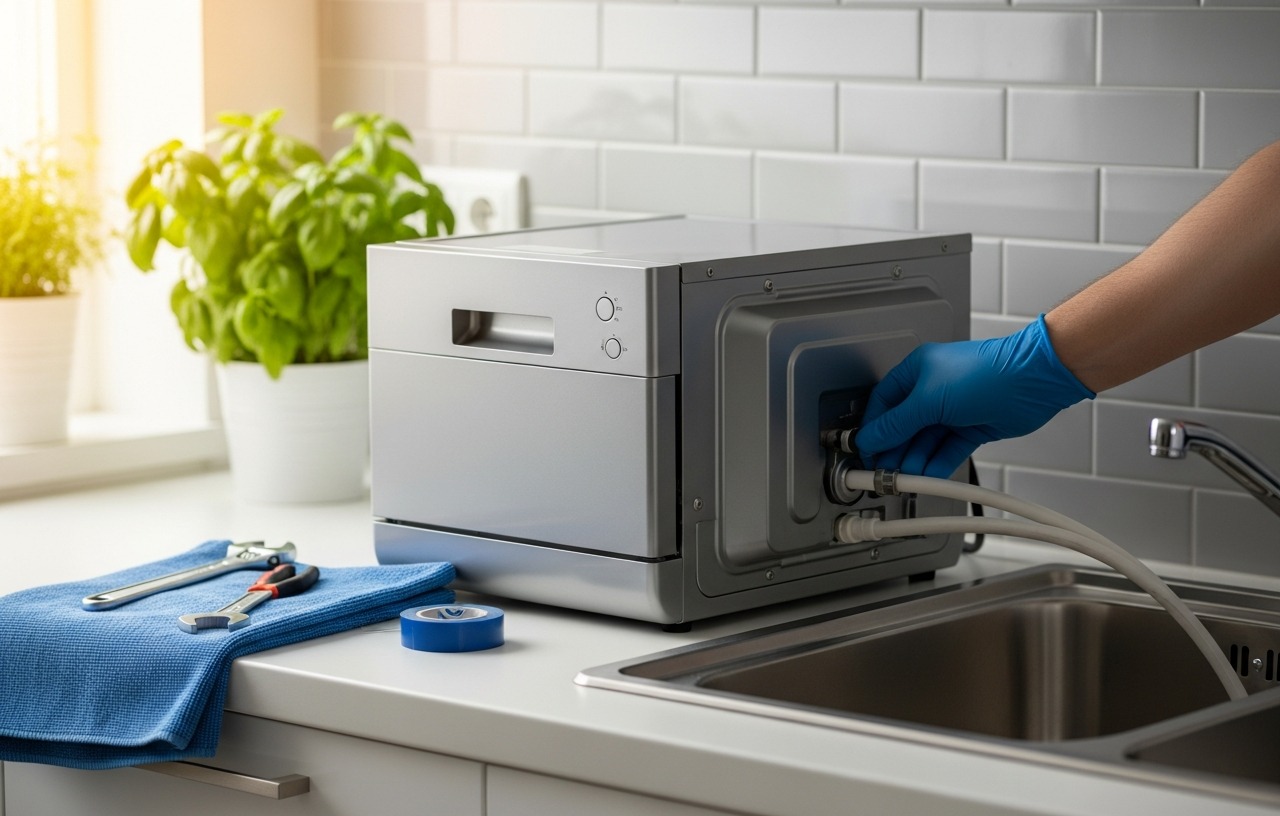
- Check the Drain Hose: Make sure the drain hose is not kinked or clogged. Straighten any kinks and check for obstructions.
- Sink Drain: If your countertop dishwasher drains into your sink, make sure the sink drain is not clogged. A slow-draining sink can cause water to back up into the dishwasher.
- Air Gap: Some installations use an air gap. Make sure it is clear of debris.
If the drain hose or pump is faulty, professional repair might be needed. A technician call for a drain pump replacement typically costs between $150 and $300, including parts and labor.
7. Malfunctioning Heating Element (Less Common)
While many countertop dishwashers use condensation drying, some models, especially larger compact units, may have a heating element to assist with drying. If this element fails, dishes will come out wet. Symptoms include cold dishes at the end of a cycle, even with a heated dry option selected.
This issue is less common for *drying only* problems, as a failed heating element often impacts washing performance too. You can sometimes test the heating element with a multimeter if you are comfortable with appliance repair, but for most users, this requires professional diagnosis.
Replacing a heating element can cost $100 to $250 for parts and labor. Given the cost and complexity, for a countertop dishwasher that might have cost $250-$400 new, it is often more economical to replace the unit if the heating element is the sole issue after several years of use. Consider the overall age and condition of your appliance before investing in this repair.
8. Dishwasher Vent or Fan Issue (Rare)
Some countertop dishwashers use a small vent or fan to expel moist air during the drying cycle. If this vent is blocked or the fan motor fails, humidity can build up inside, preventing dishes from drying properly.
Check the dishwasher's exterior for any visible vents and make sure they are not obstructed. If you suspect a fan issue, listen for unusual noises or a complete lack of fan operation during the drying phase. This is a rare issue for countertop models, which often rely on passive condensation drying.
Fan or vent repair can range from $75 to $200, depending on the part and labor involved. Again, weigh this against the cost of a new unit.
When to Call a Professional
Most drying problems can be resolved with simple checks and adjustments. However, if you have tried all the above troubleshooting steps and your dishes are still not drying, it might be time to call a qualified appliance technician. Issues like a faulty heating element, a broken drain pump, or a malfunctioning control board typically require professional expertise. For a general service call, expect to pay $75 to $150 for diagnosis alone. Factor this into your decision, especially if your countertop dishwasher is several years old.
For more insights into the value and maintenance of these compact appliances, read Are Countertop Dishwashers Worth It? We Ran the Numbers.