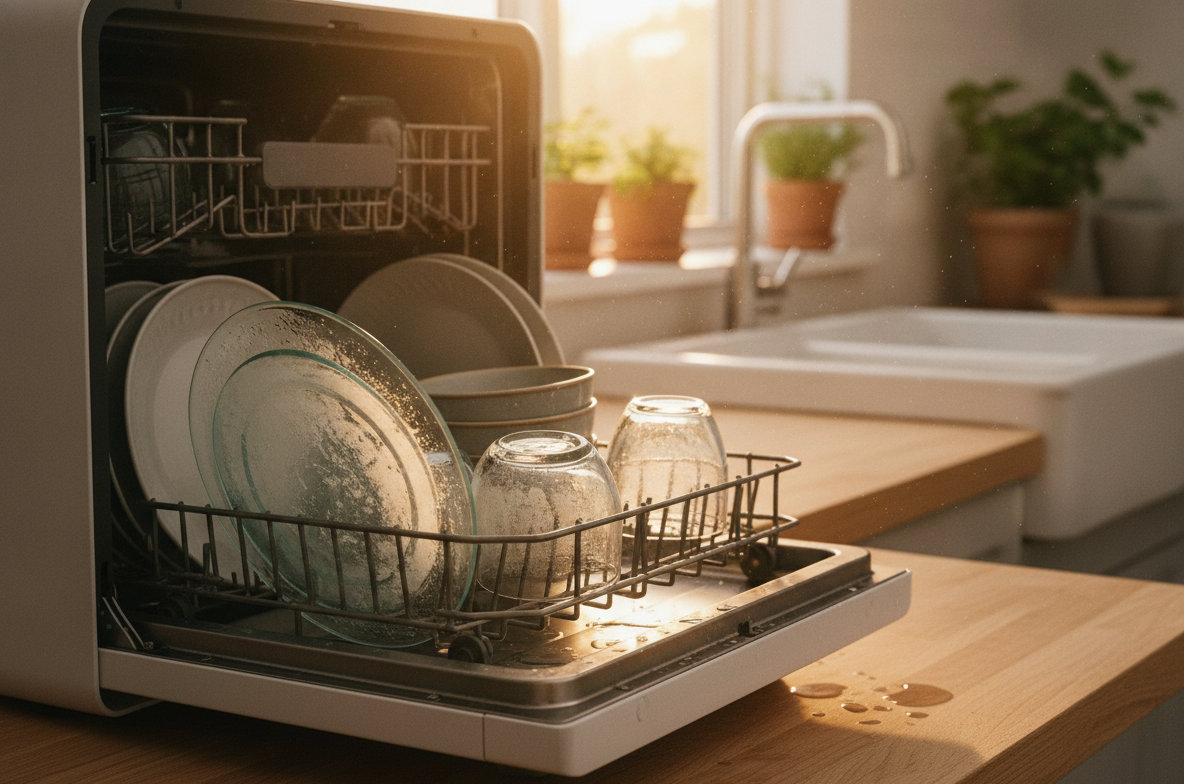
Most countertop dishwashers offer convenience for small living spaces, but seeing streaky dishes after a wash cycle defeats their purpose. The primary culprits behind cloudy glassware and spotted plates are often hard water, improper use of detergent or rinse aid, or obstructed internal components like spray arms and filters. Identifying the specific cause involves a few quick checks and minor adjustments.
Understanding Why Dishes Get Streaky
Dishwashers clean by spraying hot, soapy water onto dishes. The water then drains, and a final rinse cycle helps remove any remaining detergent and food particles. Streaks appear when something interferes with this process. This interference might be mineral deposits from hard water, leftover detergent, or even dried food bits.
Water hardness refers to the concentration of dissolved minerals, primarily calcium and magnesium. When hard water dries on dishes, it leaves behind these mineral deposits, creating a cloudy or streaky appearance. This is a common issue in many regions.
Cause 1: Hard Water and Mineral Buildup
Hard water is a frequent reason for streaky dishes. The minerals in the water do not rinse away completely. They dry on surfaces, leaving visible film and spots. This problem can worsen over time as mineral deposits build up inside the dishwasher itself.
How to Test for Hard Water
You can confirm hard water in a few ways. Look for white, chalky residue around faucets or inside kettles. That is a clear sign. For a more precise measure, use a home water test kit. These kits are affordable, usually costing between $10 and $20, and provide a quick reading of your water's hardness level. Alternatively, your local water utility company can often provide information on water hardness in your area.
Solutions for Hard Water Streaks
If you have hard water, several strategies help. The most immediate solution is to consistently use a high quality rinse aid. Rinse aid changes the surface tension of water, allowing it to sheet off dishes more effectively. This prevents water droplets from drying and leaving mineral deposits.
For persistent issues, consider descaling your dishwasher every few months. Run an empty cycle with a dishwasher-safe descaling agent or a cup of white vinegar placed in a bowl on the bottom rack. This helps remove mineral buildup from the dishwasher's interior components, improving cleaning performance.
Using a good rinse aid is a simple and effective step. The 365 by Whole Foods Market, Rinse Aid for Automatic Dishwashers, Wild Orange Scent, is an 8-fluid ounce bottle that helps prevent water spots and film. It enhances drying performance. Another excellent option is the Puracy Dishwasher Rinse Aid Cleaner. This plant-derived lemongrass scented rinse aid helps reduce spots and cloudy film for brilliant results. It works alongside your detergent, adding shine without any extra effort.
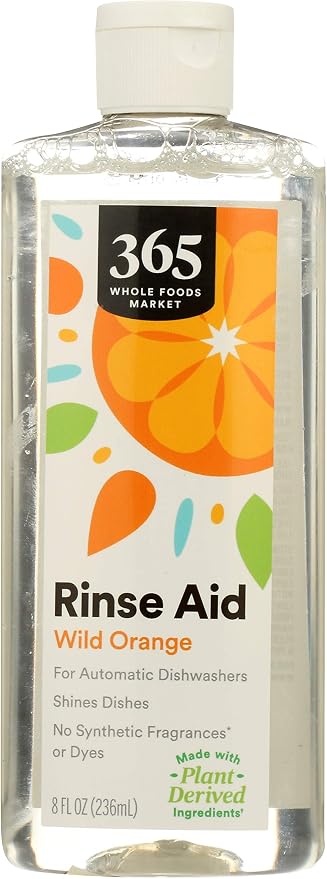
- 8 fluid ounce bottle of wild orange dishwasher rinse aid
- Helps prevent water spots and film on dishes
- Enhances drying performance
- Premium quality ingredients at accessible prices

- Dishwasher rinse aid helps reduce spots and cloudy film for brilliant results.
- Rinse aid dishwasher cleaner works alongside detergent, adding shine without extra work.
- Dishwasher rinse aid with a plant-derived lemongrass scent leaves every cycle feeling fresh.
- Rinse aid formula made without sulfates, dyes, caustics, bleach, PFAS, phosphates, or animal by-products
Cause 2: Incorrect Detergent or Rinse Aid Usage
Using the wrong type or amount of detergent, or neglecting rinse aid, contributes significantly to streaky dishes. Detergent residue can stick to dishes if too much is used, or if it does not dissolve properly. Too little detergent might not clean effectively, leaving food particles behind.
Are You Using Enough Detergent?
Check your detergent dispenser. Make sure you are filling it to the recommended line. Some countertop dishwashers have smaller dispensers than full-sized models, requiring less detergent. If you use pods, make sure they are appropriate for your dishwasher's capacity. Using an expired detergent can also cause problems, as its cleaning power diminishes over time. Always check the expiration date.
Is Your Rinse Aid Dispenser Full?
Many people forget to refill the rinse aid dispenser. Without rinse aid, water can cling to dishes and dry, leaving spots. Most countertop dishwashers have an indicator light or a clear window to show the rinse aid level. Check this before each wash cycle or every few cycles, depending on your usage.
Solutions for Detergent and Rinse Aid Issues
Experiment with different detergents. Some brands work better with specific water types. If you use powdered detergent, make sure it is fresh and not clumped. For liquid or gel detergents, verify you are using the correct amount. Pods offer convenience, but verify they dissolve fully in your dishwasher's cycle. The ECO Dishwasher Pods 168 Count, with glycerin and enzymes, offer powerful cleaning. They tackle 24-hour dried, stuck-on food and greasy messes without pre-rinsing. Their 100% pure liquid gel formula helps prevent harmful residue, and the enzyme-powered formula provides a brilliant shine.
Always keep your rinse aid dispenser topped up. This small addition makes a big difference in preventing streaks and helping dishes dry faster. If you are using a 3-in-1 detergent pod that claims to include rinse aid, you might still benefit from adding separate rinse aid, especially if you have hard water.

- 🚀 POWERFUL CLEANING, ZERO PRE-RINSE:Effortlessly tackle 24-hour dried, stuck-on food and greasy messes.
- 💧 100% PURE LIQUID GEL - NO HARMFUL RESIDUE, NO HARMFULCHEMICALS:Unlike conventional pods with powder, our.
- 🧪 ENZYME-POWERED FORMULA FOR A BRILLIANT SHINE:Powered by targeted Protease & Amylase enzymes, these pods.
- 🌿 ECO-FRIENDLY CONCENTRATED SOLUTION:Made with plant-based ingredients and a conscious formula, our pods.
Cause 3: Clogged Spray Arms or Filter
A dishwasher cannot clean effectively if its internal components are blocked. The spray arms distribute water, and the filter traps food particles. If either of these is clogged, water distribution becomes uneven, and dirty water can recirculate, leaving streaks and residue.
Diagnosis: Inspect Your Dishwasher's Components
Start by checking the spray arms. These are the rotating components that spray water onto your dishes. Look for any holes that appear blocked by food particles or mineral buildup. Use a flashlight if needed. Then, locate and inspect the dishwasher filter. Most countertop dishwashers have a removable filter at the bottom of the wash tub. It often consists of a coarse filter and a microfilter. These collect food debris and should be cleaned regularly.
Solutions for Clogged Components
Cleaning the spray arms is simple. Use a toothpick, a thin wire, or a small brush to clear any blocked holes. Make sure water can flow freely through all openings. For the filter, remove it according to your dishwasher's manual. Rinse it under running water to remove all food particles. A soft brush or old toothbrush can help dislodge stubborn debris. You can use a mild dish soap if necessary. Once clean, reassemble the filter and reinstall it correctly.
This maintenance is typically a DIY task with no direct cost, beyond your time. If a spray arm is cracked or severely damaged, replacement might be needed. A new spray arm for a countertop dishwasher usually costs between $20 and $50. A service call for professional diagnosis and repair, if you are not comfortable doing it yourself, could range from $50 to $150.
General Maintenance Tips for Streak-Free Dishes
Beyond addressing the main causes, consistent maintenance helps keep your dishes sparkling.
- Load Dishes Correctly: Do not overcrowd your dishwasher. Make sure water can reach all surfaces of your dishes. Avoid blocking the spray arms.
- Pre-Scrape Dishes: Remove large food scraps before loading. This prevents the filter from clogging quickly.
- Run Hot Water First: Before starting the dishwasher, run your kitchen faucet until the water is hot. This ensures the dishwasher starts with hot water, which helps detergent dissolve better and improves cleaning.
- Clean Dishwasher Interior: Periodically wipe down the interior walls and door gasket to remove any grime or mildew.
- Regular Descaling: Even with rinse aid, mineral buildup can occur. Run a descaling cycle every 1-3 months, especially if you have very hard water.
When to Consider a New Countertop Dishwasher
If you have tried all troubleshooting steps and your dishes still come out streaky, or if you are facing frequent breakdowns, it might be time to consider a replacement. The average lifespan of a countertop dishwasher is typically 5 to 7 years. If your unit is nearing or past this age and requiring costly repairs, a new model might be more economical in the long run.
New countertop dishwashers offer improved cleaning technologies and energy efficiency. Evaluating the cost of continued repairs against the investment in a new appliance helps you make an informed decision.
For more information on selecting a replacement, you can explore our guide on the Best Countertop Dishwasher: Space-Saving Picks for Small Kitchens.
Understanding the value of these appliances can also help with your decision. Read our article Are Countertop Dishwashers Worth It? We Ran the Numbers.
Conclusion
Streaky dishes from your countertop dishwasher are a common problem with identifiable causes. Most often, the issue stems from hard water, improper detergent or rinse aid use, or clogged internal components. By systematically checking these areas, performing simple maintenance, and making minor adjustments to your cleaning routine, you can usually resolve the problem. Consistent use of rinse aid and regular cleaning of your dishwasher's filter and spray arms will help ensure your dishes come out sparkling clean every time.