Countertop vs. Portable Dishwasher: Which Is Right for Your Small Kitchen?
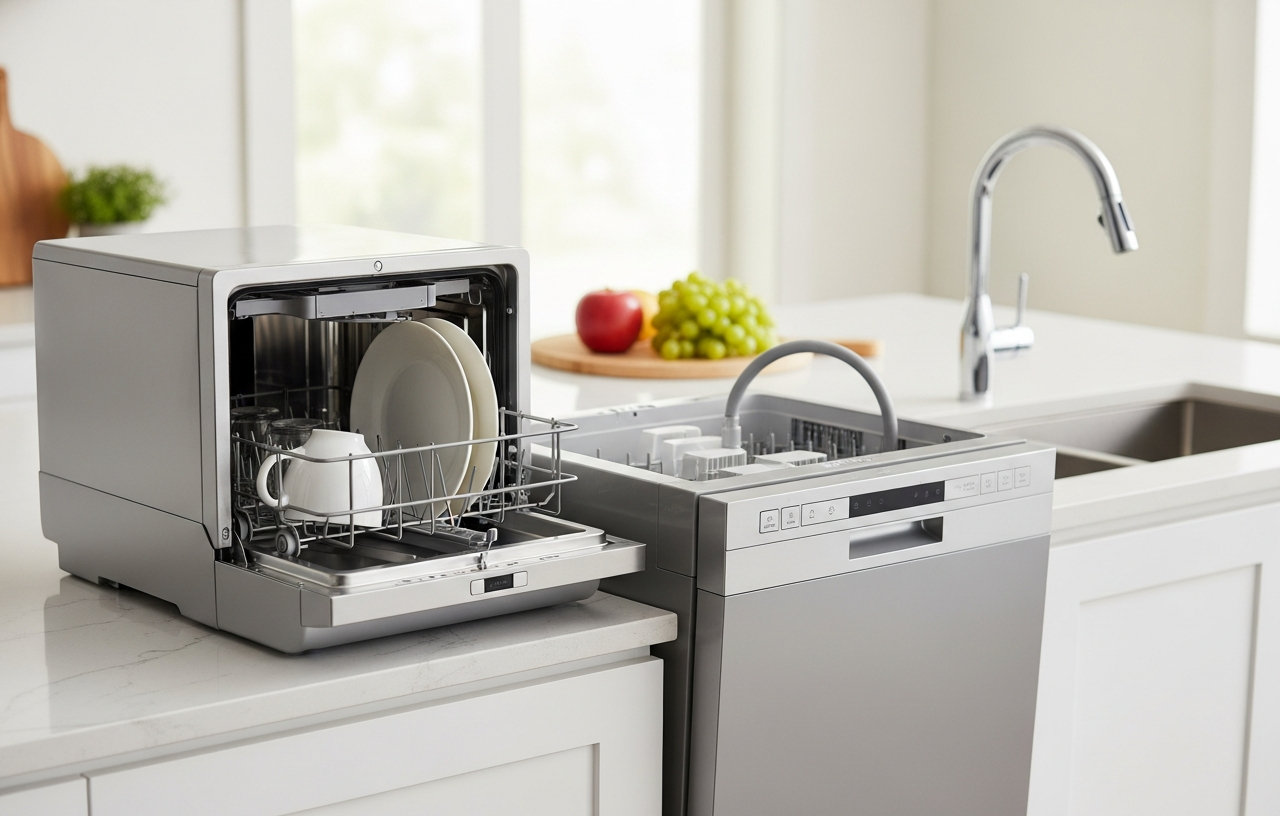
Countertop dishwashers typically accommodate 6 place settings and measure around 17 to 22 inches wide, requiring a dedicated spot on your kitchen counter. Portable dishwashers, by contrast, are larger, often 18 to 24 inches wide and 36 inches high, rolling on wheels to be connected to the sink when needed and stored elsewhere. The choice between these two compact appliance types depends primarily on available kitchen space, the volume of dishes you wash daily, and your desire for mobility.
Understanding Countertop Dishwashers
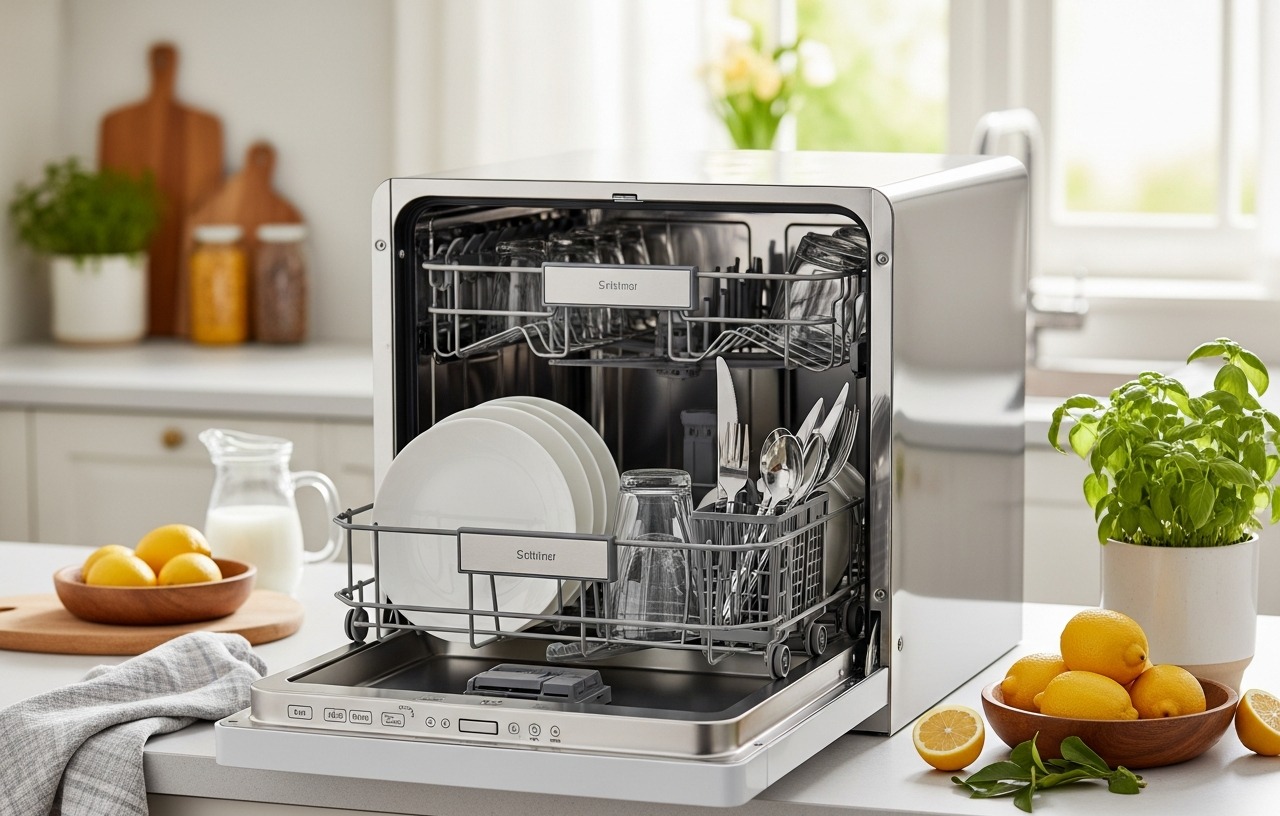
A countertop dishwasher is a compact appliance designed to sit directly on a kitchen counter. It connects to the kitchen faucet using an adapter and drains into the sink, making it a non-permanent installation. These units are popular among apartment dwellers, college students, and anyone with limited kitchen space who still wants the convenience of a dishwasher.
Capacity and Dimensions
Most countertop dishwashers can hold about 6 standard place settings. This usually includes dinner plates, salad plates, bowls, cups, and cutlery for a single person or a couple. Common dimensions are approximately 17 to 22 inches wide, 17 to 22 inches deep, and 17 to 20 inches high. For example, a typical model might be 21.6 inches wide, 19.6 inches deep, and 17.2 inches high. This compact size means they occupy a significant portion of an average kitchen counter, often leaving little room for food preparation or other small appliances.
Installation and Use
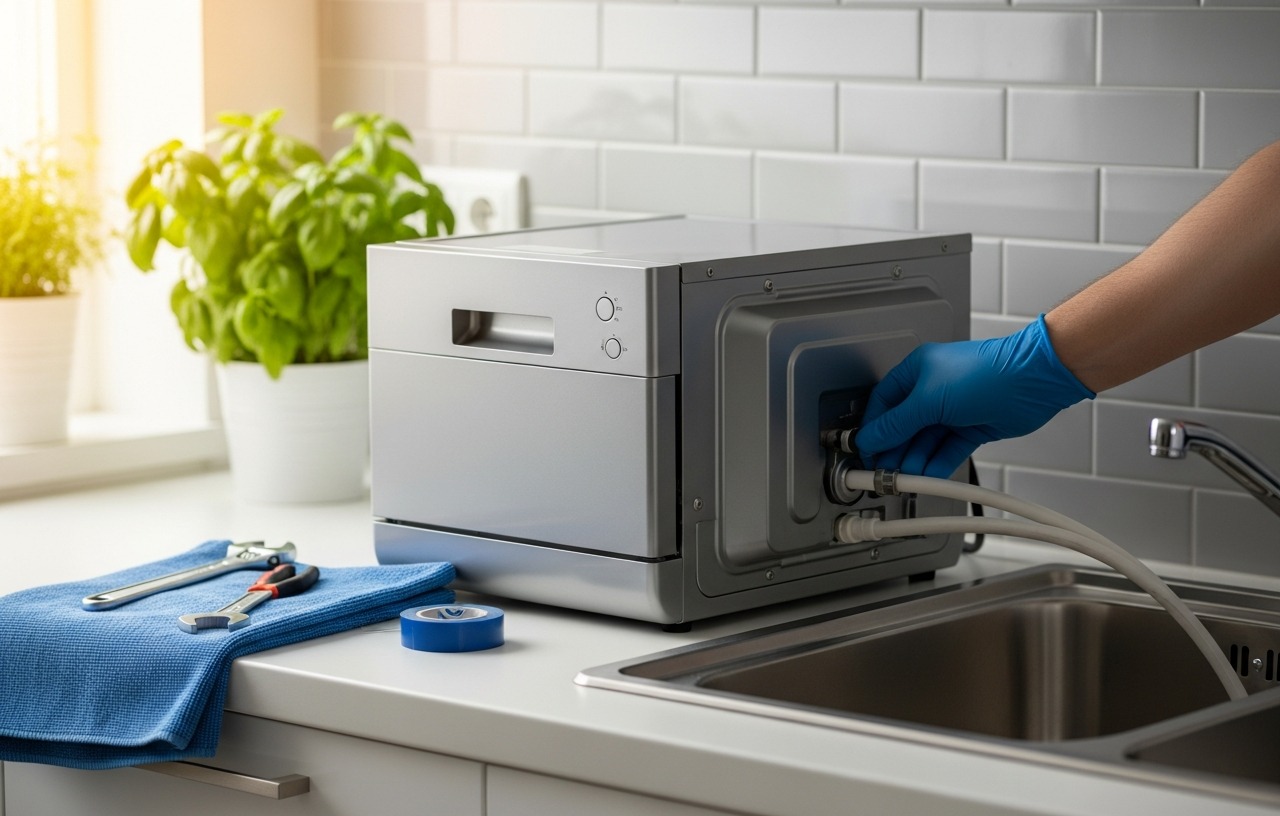
Installation is generally simple. A quick-connect hose attaches to your kitchen faucet, diverting water to the dishwasher. Another hose drains the used water into your sink. This setup means the dishwasher must be near the sink during operation. Some users choose to semi-permanently plumb their countertop units, connecting them directly to the water line and drain, but this requires more effort and may not be suitable for renters. The water consumption for a countertop dishwasher is typically efficient, using around 2 to 4 gallons per cycle.
Cost and Benefits
Countertop dishwashers are generally the most affordable option, with prices ranging from approximately $250 to $450. Their benefits include space-saving design for kitchens lacking built-in dishwasher space, no need for permanent plumbing modifications, and energy efficiency compared to hand washing. Based on manufacturer data, many models offer multiple wash cycles, including eco-friendly options and quick washes.
To learn more about their value, you can read our article, Are Countertop Dishwashers Worth It? We Ran the Numbers.
Understanding Portable Dishwashers
Portable dishwashers are larger units, typically on wheels, that can be rolled to the sink for connection and then stored away. They offer a larger capacity than countertop models and are a good alternative for those who need more washing power but lack the space or ability to install a traditional built-in dishwasher.
Capacity and Dimensions
Portable dishwashers usually hold 8 to 12 place settings, making them suitable for small families or individuals who generate more dishes. They come in two main sizes: 18-inch and 24-inch widths, mirroring standard built-in dishwasher dimensions. An 18-inch portable model might measure about 18 inches wide, 25 inches deep, and 36 inches high, while a 24-inch model would be wider. Their height often matches standard counter height, allowing them to sometimes serve as additional counter space when not in use.
Installation and Use
Like countertop models, portable dishwashers connect to the kitchen faucet with a quick-connect hose. The drain hose also empties into the sink. The main difference is their mobility. You roll the unit to the sink, connect it, run a cycle, disconnect it, and roll it to a storage spot, such as a pantry or utility closet. This temporary setup is advantageous for renters or those who prefer a clutter-free kitchen when the appliance is not in use. Portable dishwashers use slightly more water than countertop units, often between 3 and 6 gallons per cycle, depending on the model and cycle selected.
Cost and Benefits
Portable dishwashers are more expensive than countertop models, with prices generally ranging from $400 to $700 or more for higher-end units. Their primary benefits include higher capacity, greater flexibility in placement (since they can be moved), and the ability to reclaim counter space after use. They also eliminate the need for permanent installation, which can save on labor costs if you were considering a built-in unit.
Key Differences: Countertop vs. Portable Dishwasher
The distinction between these two types of dishwashers is clear once you consider a few core aspects.
Size and Footprint
- Countertop: Smallest footprint, sits on an existing counter. Requires 17-22 inches of linear counter space.
- Portable: Larger footprint, requires floor space, but can be moved. Typically 18-24 inches wide and 36 inches high.
Capacity
- Countertop: 6 place settings. Best for 1-2 people.
- Portable: 8-12 place settings. Suitable for 2-4 people or those with more frequent dish loads.
Mobility
- Countertop: Generally stationary once placed. Moving it requires lifting and disconnecting.
- Portable: Designed for mobility with built-in wheels. Easy to move for connection and storage.
Installation
- Countertop: Faucet adapter and drain hose. Can be semi-permanently plumbed.
- Portable: Faucet adapter and drain hose. Always a temporary hookup for use.
Cost
- Countertop: Entry-level price point, $250-$450.
- Portable: Mid-range price, $400-$700+.
Countertop Dishwasher vs. Built-in Dishwasher
Comparing a countertop dishwasher to a built-in model highlights significant differences in installation, capacity, and permanence. A built-in dishwasher is permanently installed under the counter, connected directly to the home's plumbing and electrical systems. This requires dedicated cabinet space, typically 24 inches wide, and professional installation may be necessary, adding $100-$300 to the appliance cost.
Built-in units offer the largest capacity, often 12-16 place settings, and are ideal for larger households. They also provide a seamless, integrated look in the kitchen. Countertop dishwashers, on the other hand, are temporary, smaller, and do not require any modifications to cabinetry or permanent plumbing. They are a practical choice for renters or those who cannot or do not want to alter their kitchen structure. The average cost for a built-in dishwasher ranges from $400 to over $1,000, not including installation.
Portable Dishwasher vs. Built-in Dishwasher
A portable dishwasher bridges some of the gaps between countertop and built-in models. It offers a larger capacity than a countertop unit (8-12 place settings) but retains the non-permanent installation of a faucet connection. Unlike a built-in, a portable unit does not require a dedicated cabinet space or permanent plumbing. This makes it a flexible option for those who might move frequently or do not want the commitment of a permanent appliance.
While a built-in dishwasher provides a clean, integrated look and larger capacity, a portable dishwasher offers similar washing power with the added benefit of mobility. For example, if you host large gatherings occasionally, a portable dishwasher can be rolled out for use and then stored away. A built-in unit is always present, but it demands a permanent spot in the kitchen layout.
Choosing Between Countertop and Portable Dishwashers
The decision between a countertop and a portable dishwasher rests on several practical considerations related to your living situation and dishwashing habits.
Kitchen Size and Layout
If your kitchen has very limited counter space, a countertop dishwasher might be a challenge. It will occupy a significant portion of usable surface. In such a scenario, a portable dishwasher, which can be stored in a pantry or utility area, might be a better fit, even if it takes up floor space when in use. Conversely, if you have ample counter space but no floor space to spare, a countertop unit makes more sense.
Dish Volume and Household Size
For a single person or a couple who mostly cook at home and generate a moderate amount of dishes, a 6-place setting countertop dishwasher is often sufficient. If you have a small family (3-4 people), entertain occasionally, or simply produce more dishes, the 8-12 place setting capacity of a portable dishwasher will be more practical. Consider how often you would need to run the dishwasher. Running a smaller unit multiple times a day might use more energy and water than one larger cycle in a portable model.
Budget Considerations
Countertop models are generally the most budget-friendly, often available for under $400. If cost is a primary concern, a countertop dishwasher offers an economical entry point into automatic dishwashing. Portable units, with their larger capacity and wheeled design, come at a higher price point, typically $400 and above.
Rental Agreements and Permanence
Both countertop and portable dishwashers are excellent choices for renters, as they do not require any permanent modifications to the property. This avoids potential issues with landlords and the need for professional installation. If you own your home and are considering a long term solution, a built-in dishwasher might be an option, but for flexibility and lower upfront commitment, compact models remain viable.
Maintenance and Care for Compact Dishwashers
Regardless of whether you choose a countertop or a portable model, proper maintenance extends the appliance's lifespan and maintains performance. Regularly clean the filter basket, typically located at the bottom of the wash tub. Food debris can accumulate there, leading to poor cleaning performance and odors. Manufacturers recommend cleaning this filter at least once a week or every few cycles.
Periodically run a cleaning cycle with a dishwasher cleaner or a cup of white vinegar to descale and sanitize the interior. Hard water can cause mineral buildup, affecting spray arm performance. Always scrape large food particles off dishes before loading to prevent clogs in the drain pump. Countertop dishwashers offer a compact, budget-friendly solution for minimal dish loads and kitchens with available counter space. Portable dishwashers provide greater capacity and mobility, suitable for small families or those who prefer to store the appliance out of sight. Evaluate your kitchen's dimensions, your daily dish volume, and your budget to select the best compact dishwasher for your needs.
You can find more information about installing these units in our DIY Guide: How to Install a Countertop Dishwasher.