Mini Fridge Energy Consumption: What It Costs & How to Save
A typical 4.5 cubic foot mini fridge uses between 0.5 and 0.8 kWh per day. This translates to an average daily cost of $0.07 to $0.11, based on the national average electricity rate of $0.14 per kWh. Annual operating costs for most mini fridges range from $25 to $40. Understanding these figures helps apartment dwellers, college students, and RV owners manage their utility expenses effectively.
Average Wattage of a Mini Fridge
The average wattage of a mini fridge varies significantly by size and model. Most compact refrigerators draw between 50 and 150 watts when their compressor is actively running. For instance, a small 1.7 cubic foot model might cycle at 60 watts, while a larger 4.5 cubic foot unit could use 100 watts. However, a mini fridge does not run its compressor constantly. It cycles on and off to maintain the set temperature.
The actual energy consumption, measured in kilowatt-hours (kWh), considers both the wattage and the duration of compressor activity. A 100-watt mini fridge running for 8 hours a day, for example, would use 0.8 kWh. This accounts for the compressor cycling on and off throughout a 24-hour period.
Calculating Your Mini Fridge's Energy Cost
Determining the exact energy cost for your mini fridge involves a simple calculation. You need two pieces of information: the appliance's daily kilowatt-hour (kWh) consumption and your local electricity rate.
- Find daily kWh consumption: Check the EnergyGuide label on your mini fridge. This yellow sticker provides an estimated annual kWh usage. Divide this annual figure by 365 to get the daily kWh. If the label is unavailable, a general estimate for models between 1.7 and 4.5 cubic feet is 0.5 to 0.8 kWh per day.
- Find your electricity rate: This is typically listed on your monthly utility bill in dollars per kWh. National averages hover around $0.14 per kWh, but rates can vary from $0.09 in some states to over $0.25 in others.
- Calculate daily cost: Multiply the daily kWh consumption by your electricity rate. For example, if your mini fridge uses 0.7 kWh per day and your rate is $0.15 per kWh, your daily cost is 0.7 kWh * $0.15/kWh = $0.105.
- Calculate annual cost: Multiply the daily cost by 365. Using the previous example, $0.105/day * 365 days = $38.33 per year.
This calculation provides a good estimate. Actual costs may fluctuate based on usage patterns and ambient conditions.
Factors Influencing Mini Fridge Energy Consumption
Several variables determine how much electricity your mini fridge uses. Recognizing these factors allows you to make informed decisions about placement, usage, and maintenance.
Size and Capacity
Larger mini fridges generally use more energy than smaller ones. A 4.5 cubic foot unit, for example, has more interior space to cool and may require a more powerful compressor than a 1.6 cubic foot model. This increased cooling demand directly translates to higher kWh consumption. When purchasing, consider your actual storage needs to avoid buying an unnecessarily large, energy-intensive model.
Age and Efficiency Rating
Older mini fridges are significantly less energy-efficient than newer models. Refrigeration technology has improved over the years, with modern compressors and insulation materials reducing power draw. An Energy Star certified mini fridge, for instance, can use 10-15% less energy than a non-certified equivalent. Some older models, particularly those from before 2000, can consume up to 50% more energy than a current model of similar size. Replacing an aging unit, even if still functional, can lead to long term savings.
Ambient Temperature
The temperature of the room where the mini fridge is located plays a major role in its energy use. If a mini fridge is placed in a hot garage or a sun-exposed dorm room, its compressor will need to work harder and run more frequently to maintain the internal set temperature. Conversely, a unit in a cool, climate-controlled environment will operate more efficiently. Manufacturer data often specifies optimal operating temperatures, typically between 60°F and 90°F (16°C and 32°C).
Door Opening Frequency and Duration
Every time the mini fridge door opens, cold air escapes and warm air enters. The appliance then has to expend energy to re-cool the interior. Frequent or prolonged door openings significantly increase energy consumption. This is especially true in a busy office or common area where many people access the fridge throughout the day. Minimize how often you open the door and close it quickly.
Thermostat Setting
A lower thermostat setting (colder temperature) demands more work from the compressor, leading to higher energy consumption. Most foods and beverages are safely stored at temperatures between 35°F and 40°F (1.7°C and 4.4°C). Setting the thermostat colder than necessary offers no significant benefit and only wastes electricity. Adjust the setting to the warmest safe temperature for your contents.
Condenser Coils and Ventilation
The condenser coils, usually located on the back or bottom of the mini fridge, dissipate heat. If these coils are covered in dust and grime, they cannot release heat efficiently, forcing the compressor to work harder. Additionally, inadequate ventilation around the fridge, such as placing it too close to a wall or cabinet, traps heat and makes the unit less efficient. Allow at least 2-3 inches of space around the back and sides for proper airflow.
Defrosting Needs
Mini fridges with manual defrost freezers can build up a thick layer of ice. This ice acts as an insulator, reducing the freezer's efficiency and making the compressor work harder to maintain cold temperatures. Regular defrosting, typically every few months or when ice buildup reaches a quarter-inch thickness, is essential for optimal energy performance. Some models offer auto-defrost, which is more convenient but can sometimes use slightly more energy due to heating cycles.
For detailed instructions, refer to our guide on How to Defrost Mini Fridge: Simple step by step.
Practical Tips to Reduce Mini Fridge Energy Use
Even small changes in how you use and maintain your mini fridge can lead to noticeable reductions in energy consumption and lower utility bills.
Proper Placement
Place your mini fridge in the coolest possible location, away from direct sunlight, heat vents, ovens, or other heat-generating appliances. Make sure there is ample space around the unit, specifically 2-3 inches on the sides and back, to allow for proper air circulation. This helps the condenser coils dissipate heat efficiently and prevents the compressor from overheating.
Maintain Optimal Temperature Setting
Set the thermostat to the warmest safe temperature, typically between 35°F and 40°F (1.7°C and 4.4°C). Use an appliance thermometer inside the fridge to verify the actual temperature. Adjusting the setting even a few degrees warmer can save energy without compromising food safety. Avoid setting it to the coldest possible setting unless absolutely necessary, as this significantly increases power draw.
Check Door Seals
Inspect the door gaskets (seals) regularly for cracks, tears, or stiffness. A faulty seal allows cold air to escape, forcing the compressor to run more often. You can test the seal by closing the door on a dollar bill. If the bill pulls out easily, the seal might need cleaning or replacement. Clean the gaskets with mild soap and water to keep them pliable and ensure a tight seal.
Keep Coils Clean
Dust and debris on the condenser coils act as an insulating layer, hindering heat dissipation. At least once or twice a year, unplug the mini fridge and gently vacuum or brush the coils. This simple maintenance step can improve efficiency by 10-20% and extend the lifespan of the compressor.
Avoid Overfilling and Underfilling
A mini fridge that is too empty contains more air, which warms up quickly when the door is opened. A moderately full fridge holds its temperature better. However, overfilling can block air vents and restrict cold air circulation, making the unit work harder. Aim for a balance, leaving enough space for air to circulate freely around items.
Defrost Regularly
If your mini fridge has a manual defrost freezer, make sure to defrost it when ice buildup reaches about a quarter-inch thick. A thick layer of ice reduces cooling efficiency and increases energy consumption. Unplug the unit, remove contents, and allow the ice to melt naturally, or use a fan for faster defrosting.
Limit Door Openings
Plan what you need before opening the door to minimize the time it remains open. Avoid leaving the door ajar. Every time the door opens, warm air enters, and the fridge must use energy to cool down again. This habit can contribute significantly to overall energy use.
When to Consider Replacing Your Mini Fridge
While mini fridges are generally reliable, there comes a point when replacement is more economical than continued use or repair. This decision often balances repair costs against potential energy savings and lifespan. For a deeper understanding of repair considerations, consider reviewing our article on Mini Fridge Not Cooling? Common Fixes & Repair Costs.
Age of the Unit
Mini fridges typically last between 6 and 10 years, according to manufacturer data. An older unit, especially one over 8-10 years old, will likely be less energy-efficient than a modern equivalent. Even if it still cools, its energy consumption might be considerably higher. The increased utility costs can outweigh the cost of a new, more efficient model over just a few years.
Frequent Malfunctions
If your mini fridge frequently struggles to maintain temperature, cycles on and off excessively, or requires repeated repairs, it might be nearing the end of its functional life. Common issues like a failing compressor, refrigerant leaks, or persistent cooling problems often point to an appliance that is becoming unreliable and costly to operate.
High Energy Bills
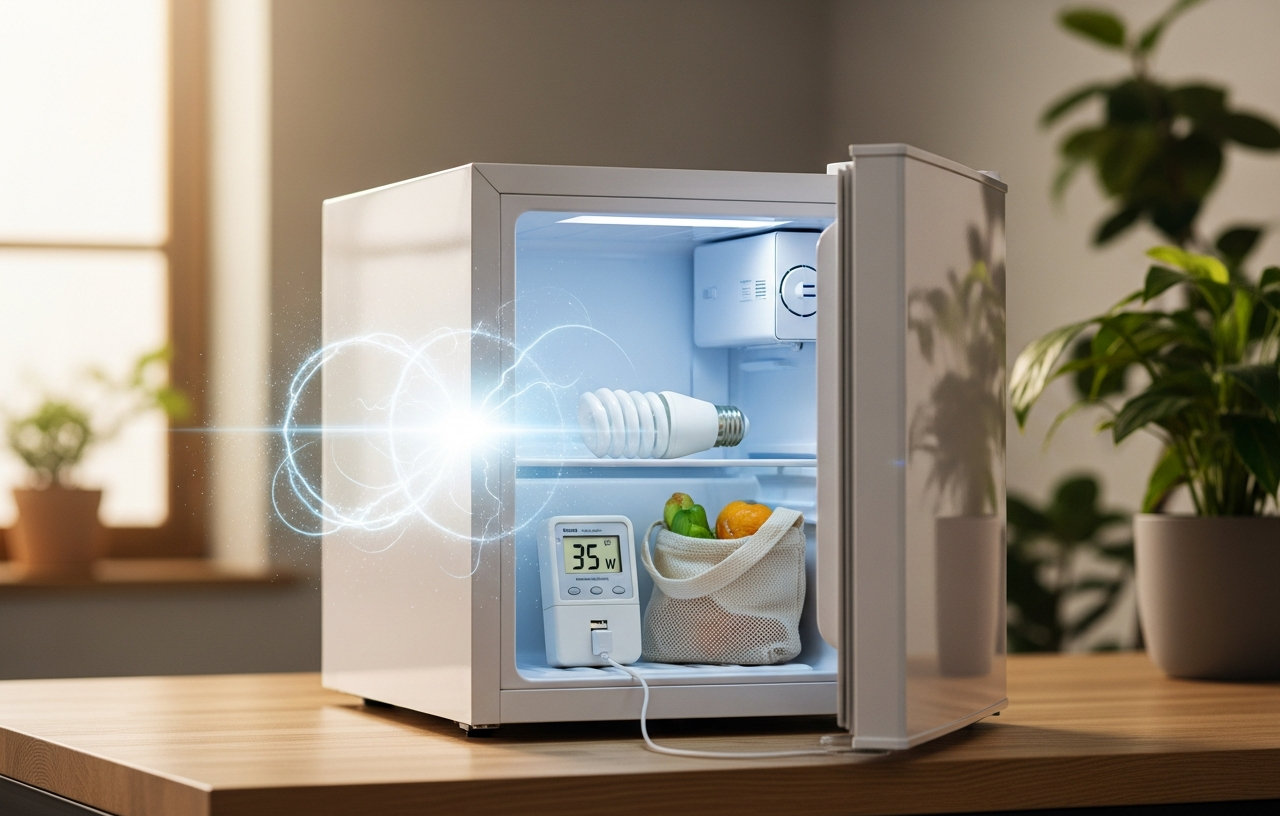
A sudden or gradual increase in your electricity bill, without other obvious causes, could indicate that your mini fridge is drawing more power than it should. You can use a Kill-A-Watt meter (available for around $20-$30) to measure its actual energy consumption over a few days. If the readings are significantly higher than the EnergyGuide label or expected values for its size, it's a strong indicator of declining efficiency.
Visible Wear and Tear
Cracked or brittle door seals, excessive condensation inside the fridge, or unusual noises (such as loud rattling or humming) are signs of wear that can impact efficiency. While seals can be replaced, a combination of these issues often suggests broader internal problems. Considering a new, Energy Star rated mini fridge can offer both reliability and reduced operating costs in the long run.
Conclusion
Understanding the energy consumption of your mini fridge helps you make informed choices that benefit both your wallet and the environment. By paying attention to factors like age, placement, and maintenance, you can significantly reduce operating costs. A well maintained, efficiently used mini fridge provides convenience without becoming a drain on your electricity bill.