Countertop Dishwasher Not Draining? 7 Common Fixes
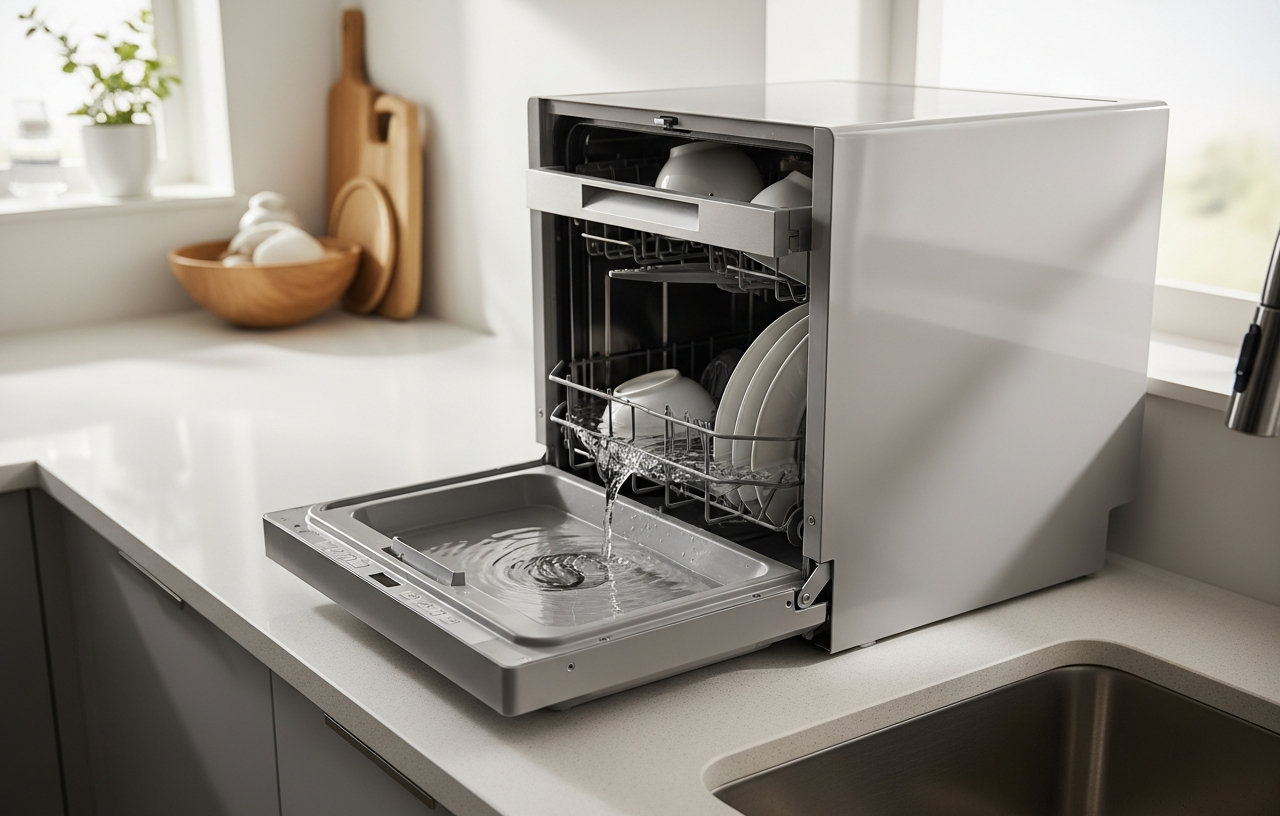
Countertop dishwashers offer compact convenience for apartments, RVs, and small kitchens. When one stops draining, it creates a messy problem. Standing water in the tub means dishes are not clean and the appliance is unusable. Most draining issues are simple to diagnose and fix, often without needing a technician.
Before beginning any troubleshooting, always unplug your countertop dishwasher from the power outlet. This prevents electrical hazards and accidental operation. Have a towel or two ready to catch any spilled water.
1. Inspect the Drain Hose for Kinks or Blockages
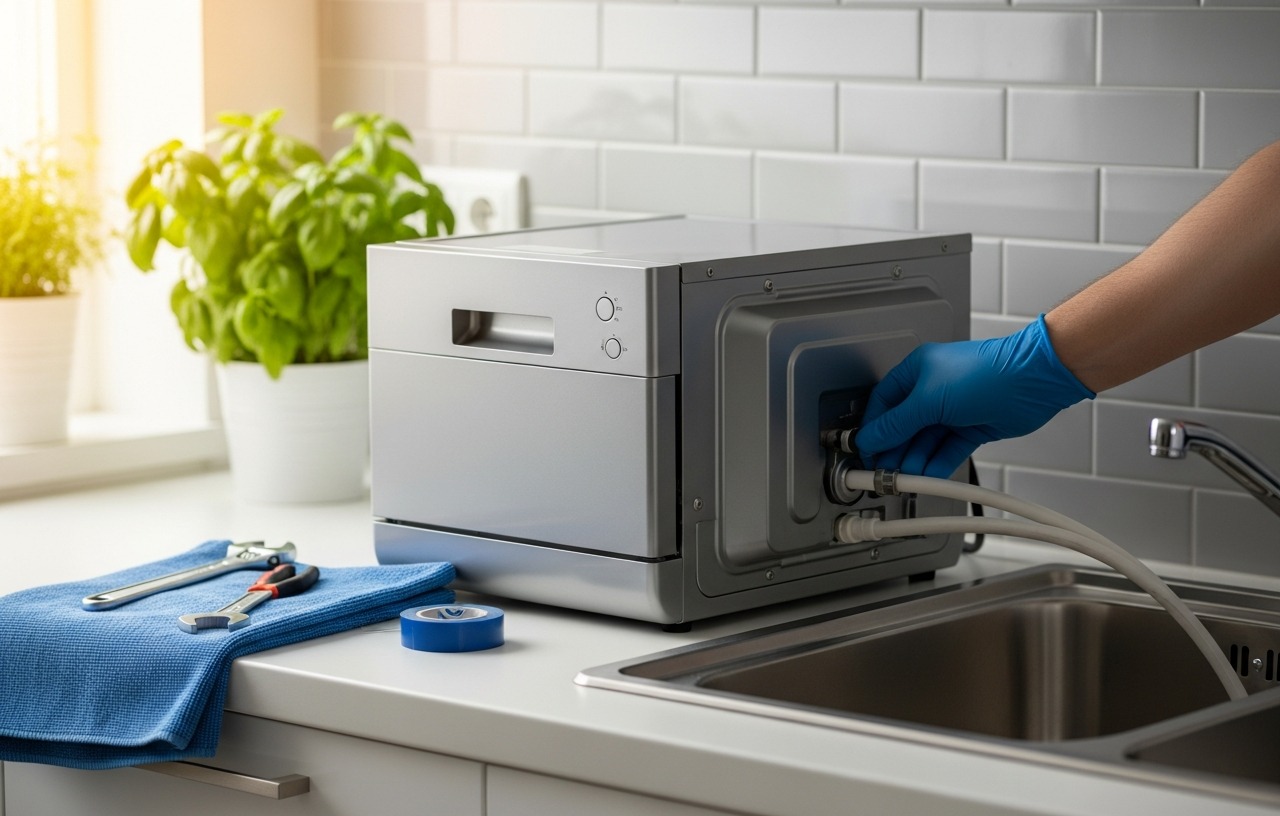
The drain hose is the most frequent culprit when a countertop dishwasher, whether a Danby countertop dishwasher or an SPT countertop dishwasher, fails to drain. These hoses are flexible, making them prone to kinking, especially if the dishwasher has been moved recently. A kink restricts water flow, causing it to back up into the wash tub.
Examine the entire length of the drain hose, from the back of the dishwasher to the sink or drain connection. Straighten any bends or kinks you find. Make sure the hose is not trapped underneath the appliance or against a wall. The hose should have a gentle slope downwards to allow gravity to assist with drainage. If the hose runs uphill at any point, water will struggle to exit.
If the hose appears kink-free, disconnect it from the sink drain. Check the hose opening for any blockages, such as food debris or grease buildup. You can run water through the hose in the sink to confirm it flows freely. A small brush can help clear minor obstructions. This fix costs nothing and resolves many draining problems.
2. Clean the Dishwasher Filter
Food particles, grease, and other debris can accumulate in the dishwasher's filter, blocking the drain path. Nearly all countertop dishwashers have a filter system located at the bottom of the wash tub. This is a common point of failure for drainage, regardless of brand.
Locate the filter, typically a cylindrical or flat mesh screen. Twist or unclip it according to your appliance's manual. Remove the filter and rinse it thoroughly under running water. Use a soft brush, like an old toothbrush, to dislodge any stuck-on food or grime. Pay close attention to the fine mesh. Some models have multiple filter components, including a coarse filter and a microfilter. Clean all parts before reassembling them. Reinsert the clean filter securely into its housing.
Cleaning the filter is a simple, free maintenance task that can restore proper drainage. It should be done regularly, perhaps once a week or every few cycles, to prevent future issues.
3. Check the Sink Drain and Air Gap
Your countertop dishwasher drains into your sink, often using a quick-connect adapter. If your sink itself is clogged, the dishwasher cannot drain properly. The water has nowhere to go.
Run your sink faucet to see if the sink drains slowly or not at all. If the sink is backed up, address that issue first. You might need to use a plunger or a drain cleaner for a minor clog. For more stubborn sink clogs, a plumber might be necessary, costing $100 to $250. Once the sink drains freely, test your dishwasher again.
Some dishwasher installations, though less common for countertop models, might involve an air gap device on the sink deck. An air gap prevents dirty drain water from siphoning back into the clean water supply. If an air gap is present and clogged, it can impede drainage. Check the air gap cover for debris and clear any blockages. For typical countertop dishwasher setups that connect directly to a faucet, an air gap is usually not a factor.
For more details on connecting your appliance, you can review installation guides. DIY Guide: How to Install a Countertop Dishwasher
4. Clear the Drain Pump and Impeller
If the hose and filter are clear, the problem might lie with the drain pump itself. The drain pump is responsible for forcing water out of the dishwasher. Sometimes, small pieces of glass, plastic, or hard food debris can bypass the filter and jam the pump's impeller.
To check the drain pump, first, make sure the dishwasher is unplugged. Remove the filter and any standing water from the tub. You will usually see a small cover over the drain pump impeller at the bottom of the tub. Carefully remove this cover. Use gloves and a flashlight to inspect the impeller area. Look for any foreign objects that might be obstructing the blades. Gently remove any debris you find. You may need to use pliers or tweezers for stubborn items. Turn the impeller by hand to make sure it spins freely. Be careful, as sharp objects may be present.
If the impeller is free of debris and spins, the pump itself might be faulty. A new drain pump for a countertop dishwasher typically costs $30 to $70. Replacing it yourself is a moderately difficult task, requiring basic tools and some disassembly of the appliance. Professional repair for a drain pump usually runs $100 to $200, including parts and labor.
5. Verify Proper Loading and Detergent Use
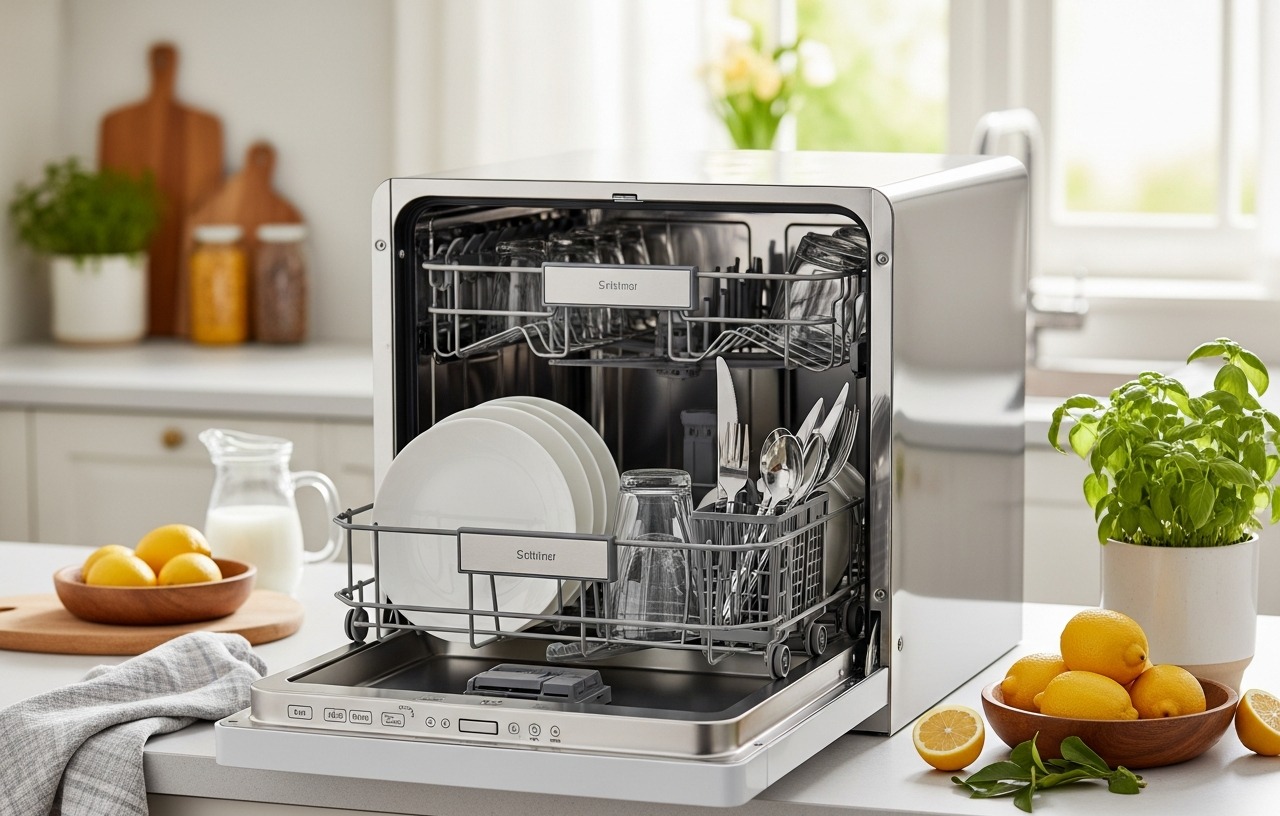
Improper loading can sometimes contribute to draining issues, although it is less direct than a clog. Overloading the dishwasher can prevent water from circulating effectively, leaving food particles behind that eventually clog the filter or drain. Make sure not to block the spray arms or the filter area with large dishes.
Using too much detergent, or the wrong type of detergent, can also cause problems. Excessive suds can interfere with the draining cycle, creating a foamy residue that doesn't clear properly. Always use detergent specifically designed for dishwashers and follow the manufacturer's recommendations for quantity. If you suspect suds are an issue, run an empty cycle with no detergent or a cup of white vinegar to clear out residue.
6. Reset the Dishwasher
Like many electronic appliances, a countertop dishwasher can sometimes experience a temporary glitch in its control system. A simple reset can often resolve minor electronic issues that prevent the drain cycle from activating.
Unplug the dishwasher from its power source. Wait for at least five minutes to allow any residual electrical charge to dissipate. Then, plug the dishwasher back in. This hard reset can clear error codes or reset the internal computer. Try running a short cycle to see if the draining problem is resolved. This is a quick and free troubleshooting step worth trying before moving to more complex solutions.
7. Address a Faulty Drain Pump or Control Board
If all other troubleshooting steps fail, the problem likely lies with a faulty component, such as the drain pump or the main control board. While you may have cleared the impeller, the pump motor itself could be worn out or burned out. Symptoms of a failing pump include a humming sound without any water movement, or no sound at all when the drain cycle should engage.
A faulty control board is a less common but more expensive issue. The control board is the 'brain' of the dishwasher; it sends signals to all components, including the drain pump. If the board is defective, it might not signal the pump to activate, even if the pump itself is functional. Diagnosing a control board issue often requires specialized testing tools. Replacing a control board can cost $80 to $200 for the part alone, with professional labor adding another $150 to $300.
When to Call a Professional
Many countertop dishwasher draining problems are resolvable with a few simple steps. You can often clear a clogged hose, clean a filter, or remove debris from the drain pump yourself. These DIY fixes save money and get your appliance running quickly.
However, if you have checked all the common culprits and the dishwasher still won't drain, it might be time to call a qualified appliance repair technician. This is especially true if you suspect a faulty drain pump motor or a control board issue. Professional diagnosis and repair can prevent further damage and make sure your appliance is fixed correctly. Consider the cost of repair versus replacement. Sometimes, for older or less expensive models, replacing the unit might be more economical than a costly professional repair.
Understanding whether a countertop dishwasher is worth the investment can help with this decision. Are Countertop Dishwashers Worth It? We Ran the Numbers