Before beginning any troubleshooting, always unplug your mini fridge from the wall outlet. This prevents electrical shock and makes sure you can safely inspect internal components. Like any other light bulb, the one in your mini fridge has a finite lifespan. Over time, the filament can break, or the LED array can fail. This is usually the first thing to check because it is the easiest and cheapest fix.
How to Inspect and Replace the Bulb
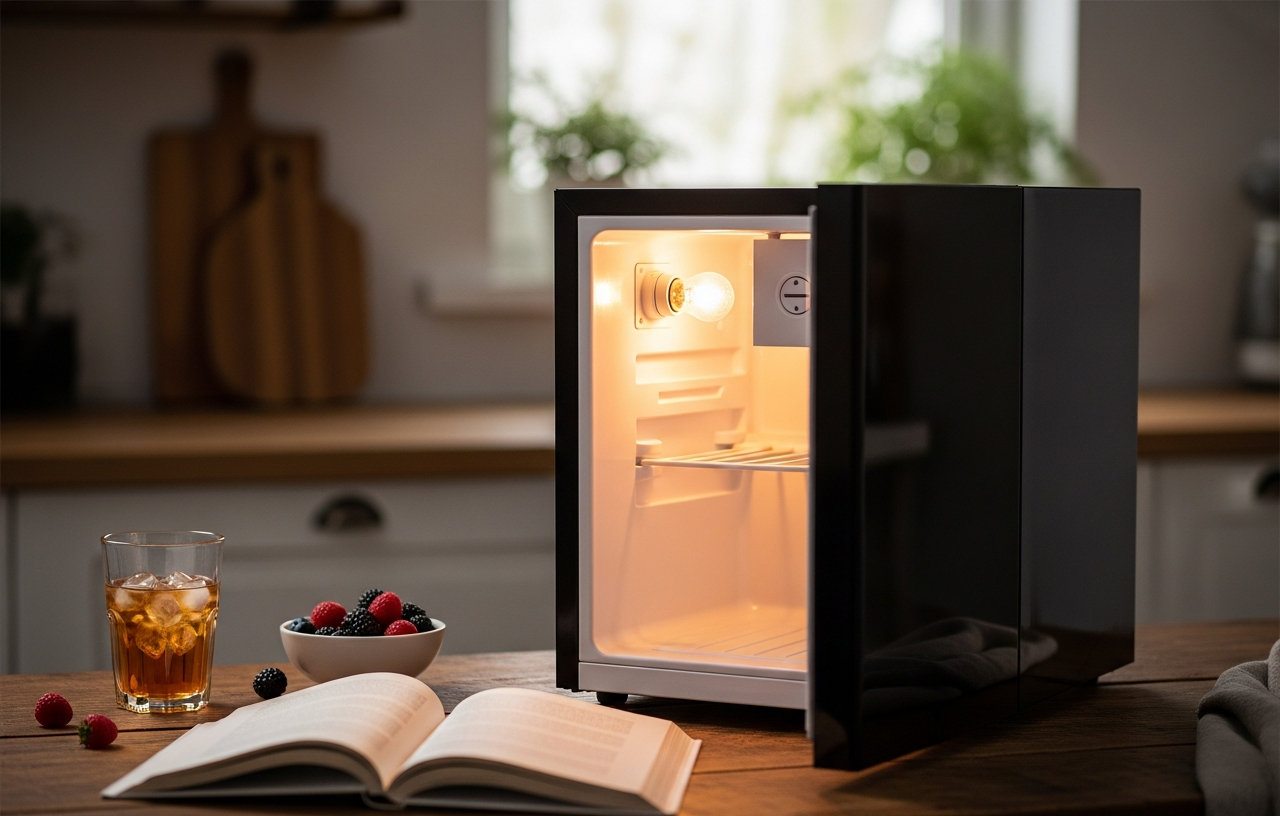
- Locate the bulb: The light bulb is typically located inside the fridge compartment, often near the top or side, protected by a clear or frosted plastic cover.
- Remove the cover: Most covers snap into place or are secured with a small screw. Gently pry off the cover or use a screwdriver to remove it.
- Remove the old bulb: Carefully twist the bulb counter-clockwise to unscrew it from its socket. Some mini fridges use push-in bulbs, which you simply pull straight out.
- Inspect the bulb: Look for a broken filament (for incandescent bulbs) or any signs of discoloration or damage. Even if you see no visible damage, it is a good idea to test with a new bulb.
- Install a new bulb: Screw in or push in the new bulb, making sure it is securely seated.
- Test the light: Plug the mini fridge back in and open the door. If the light comes on, you have solved the problem.
- Replace the cover: Once confirmed, reattach the light cover.
Replacement bulbs for mini fridges are typically 10-watt or 15-watt appliance bulbs. They are widely available online and at hardware stores. The cost for a new bulb usually ranges from $5 to $20 for a pack of one or two. This is a very budget-friendly repair.
For many common mini fridge models, a reliable replacement is the BlueStars 22002263 10W 120V Light Bulb Replacement. This two-pack is compatible with several top brands, including Whirlpool, Kenmore, and KitchenAid models. This low-wattage bulb is dimmable and boasts an average life of 2,000 hours, making it a durable choice for consistent illumination in your mini fridge.

- Dimmable Construction
- Low Wattage Bulb
- 2, 000 Average Life Hours
- High Quality Material
Troubleshooting the Door Switch
If replacing the bulb does not fix the issue, the next most common culprit is the door switch. This small button or lever, usually located in the fridge's door frame, detects when the door is open or closed. When the door opens, the switch is released, completing a circuit that turns the light on. When the door closes, it presses the switch, breaking the circuit and turning the light off.
How to Check and Replace the Door Switch
- Locate the switch: The door switch is usually a small, spring-loaded button or plunger found on the frame of the fridge, where the door meets the main body.
- Test the switch manually: With the fridge plugged in (and the new bulb installed), press the switch in and out several times. Listen for a click. If the light flickers or comes on intermittently, the switch might be faulty.
- Unplug the fridge: Always unplug the appliance before proceeding with any repairs.
- Remove the switch: Most door switches snap into place or are held by small clips. You might need a flathead screwdriver to gently pry it out. Some are secured with a screw.
- Inspect for damage: Look for any visible cracks, corrosion, or frayed wires.
- Test with a multimeter (optional): If you have a multimeter, set it to continuity mode. With the switch disconnected, place the probes on the terminals. The meter should show continuity (a beep or zero ohms) when the button is released and no continuity when pressed. If it does not, the switch is bad.
- Install a new switch: Connect the wires to the new switch and snap it into place. Make sure the wires are secure.
- Test the light: Plug the mini fridge back in and test the door light.
A replacement door switch typically costs between $10 and $30. It is a relatively simple part to swap out for most DIYers. If you are uncomfortable working with electrical components, a professional can replace it, but the labor cost (around $50 to $150) might approach the value of a basic mini fridge.
Investigating Electrical Connections and Wiring
Less commonly, a loose or damaged wire can prevent the mini fridge light from working. This is more likely if the light stopped working after the fridge was moved, bumped, or if there have been other electrical issues with the unit. This problem might also exist if other parts of the fridge are not functioning correctly.
Steps to Check Wiring
- Unplug the fridge: This is a critical safety step.
- Access the light assembly and switch: You will need to carefully remove the light cover and potentially the door switch as described in previous sections to expose the wiring.
- Inspect all visible wires: Look for any frayed, cut, or disconnected wires leading to the light socket or the door switch. Pay close attention to the connections at the terminals.
- Secure loose connections: If you find a loose wire, carefully reattach it. Make sure it is firmly seated in its terminal.
- Repair damaged wires: If a wire is cut or frayed, you can often repair it by stripping the ends and using a wire connector or electrical tape, assuming the damage is minor. For significant damage, replacing the entire wire section is safer.
- Test the light: Plug the fridge back in and check if the light now works.
Repairing a loose wire usually costs nothing if you do it yourself. Replacing a short section of wire and connectors might cost $5 to $15. If the wiring issue is complex or located deep within the fridge's insulation, professional help might be needed. An appliance technician could charge $75 to $200 for diagnosing and repairing wiring issues, depending on complexity.
If your mini fridge is experiencing broader electrical problems, such as not cooling at all, the issue might extend beyond the light. You can find more information on general power issues and cooling problems in our article, Mini Fridge Not Cooling? Common Fixes & Repair Costs.
Examining the Control Board (If Applicable)
Some modern mini fridges, especially those with digital controls or advanced features, may have a control board that manages various functions, including the interior light. If the bulb and door switch are both functional, and there are no obvious wiring issues, a faulty control board could be the cause. This is a much less common scenario for a light-only issue.
Diagnosing a Control Board Issue
Diagnosing a control board issue without specialized tools can be difficult. Often, if the control board is failing, you might notice other symptoms, such as inconsistent cooling, error codes on a digital display (if present), or other components not functioning correctly. If only the light is affected, it is unlikely to be the control board unless it has a dedicated circuit for the light that has failed independently.
Replacement Considerations
Replacing a mini fridge control board is generally not a DIY task for the average user. It involves disconnecting multiple wires and often requires specific knowledge of the fridge's electrical system. Control boards can be expensive, ranging from $50 to $200 or more, depending on the fridge model. Professional installation can add another $100 to $300 in labor costs.
Considering the cost of a new mini fridge, which can range from $80 to $300 for basic models, replacing a control board for just a light issue is rarely economically sound. It often makes more sense to purchase a new unit if the control board is the problem and the fridge is out of warranty.
When to Call a Professional
For a mini fridge light that is not working, calling a professional is rarely the most cost effective solution. The most common fixes (bulb and door switch replacement) are simple and inexpensive DIY tasks. Even wiring repairs are often manageable for those comfortable with basic electrical work.
You might consider a professional if:
- You have checked the bulb, door switch, and visible wiring, and the light still does not work.
- You are uncomfortable working with electrical components, even after unplugging the unit.
- The mini fridge is still under warranty, and you want to make sure the repair does not void it.
- Other, more significant problems are occurring with the fridge alongside the light issue.
In most cases, the cost of a service call and labor will exceed the cost of replacing the mini fridge, especially for older or budget-friendly models. A new mini fridge for apartment living or a dorm room is often a more practical choice than paying for a complex professional repair on an older unit.
Final Thoughts on Mini Fridge Light Repair
A non-working light in your mini fridge is typically a minor inconvenience, not a sign of a major appliance failure. Starting with the simplest and most common causes, like the light bulb and door switch, will resolve the issue for most people. These repairs are quick, cheap, and require minimal tools or expertise. Remember to always prioritize safety by unplugging the unit before starting any work.