Portable Washing Machine Electricity Use: Cycle-by-Cycle Cost Breakdown
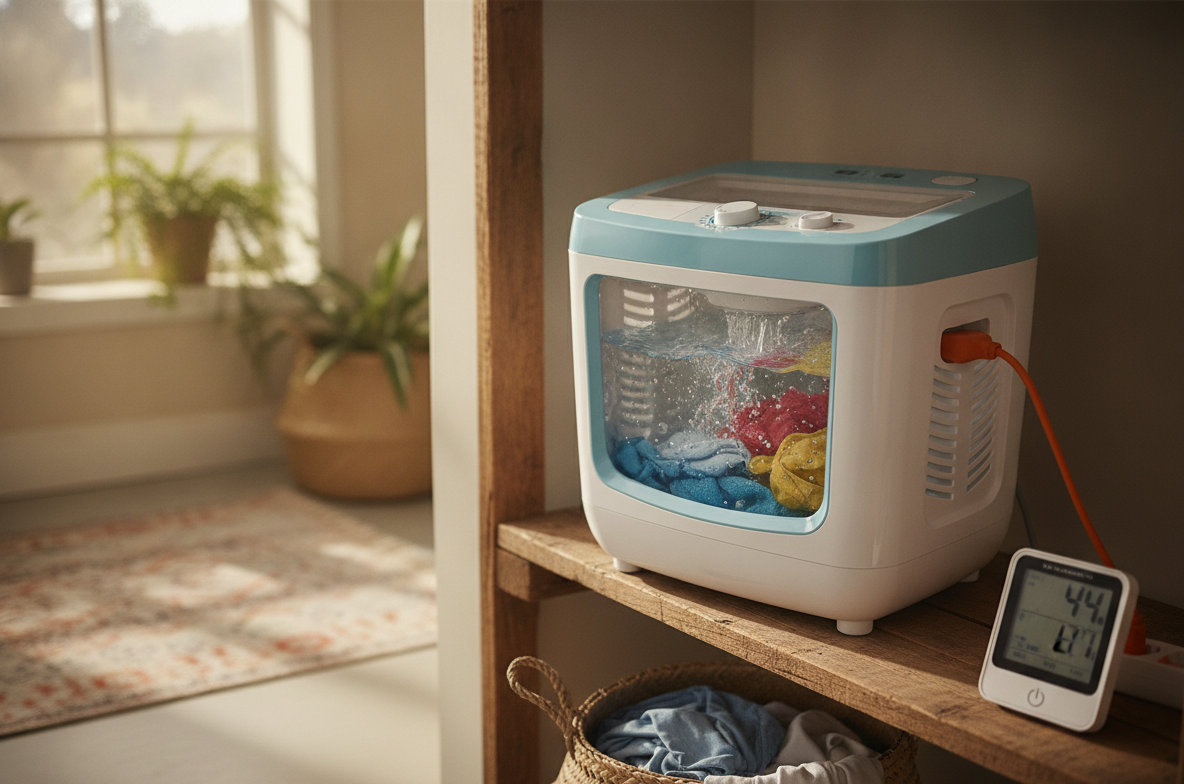
Portable washing machines typically consume between 0.05 and 0.5 kilowatt-hours (kWh) of electricity per wash cycle. This translates to an electricity cost of roughly $0.007 to $0.07 per load, assuming a national average electricity rate of $0.14 per kWh. These compact appliances offer convenience for small living spaces, but their operational costs extend beyond the initial purchase price. Understanding how much electricity your portable washer uses per cycle helps you manage monthly utility bills and decide if a compact laundry solution fits your budget.
Several factors influence a portable washing machine's power consumption. The machine's size, its motor efficiency, the chosen water temperature, and the length of the cycle all play a role. Larger capacity units or those with an internal water heater will draw more power than smaller, cold-water-only models. A typical wash cycle for a portable machine lasts between 30 and 60 minutes, with varying power demands throughout.
Understanding Portable Washing Machine Power Consumption
Portable washing machines, designed for smaller loads and often without a dedicated hot water inlet, are generally more energy-efficient than full-sized models. However, their electricity use still varies. The main components drawing power are the motor for agitation and spinning, and if present, the heating element for hot water cycles. The pump also uses electricity to drain water.
Key Factors Influencing Electricity Use
- Machine Capacity: Smaller machines (1.0-1.6 cubic feet) use less power than larger ones (2.0-2.7 cubic feet) because they have smaller motors and process smaller water volumes.
- Water Temperature: Heating water is the most energy-intensive part of any washing cycle. If your portable washer has an internal heater for hot cycles, it will use significantly more electricity than a cold-water-only wash.
- Cycle Length and Type: A quick wash cycle uses less energy than a heavy duty or delicate cycle. Spin-only cycles are the most energy-efficient.
- Motor Efficiency: Some portable washers feature more efficient motors.
Typical Wattage and kWh per Cycle
Based on manufacturer data and researched from user reviews, here is a general breakdown of power consumption for common portable washing machine operations:
- Wash/Agitation Motor: Typically draws 50 to 250 watts during agitation.
- Spin Motor: Draws 200 to 500 watts during the high-speed spin cycle.
- Drain Pump: Uses 10 to 50 watts when active.
- Internal Water Heater (if present): This is the largest draw, often between 1000 and 2000 watts when heating water.
To calculate kilowatt-hours (kWh), you multiply watts by hours and divide by 1000. For example, a 200-watt motor running for 30 minutes (0.5 hours) uses (200 * 0.5) / 1000 = 0.1 kWh.
A typical cold wash cycle, without an internal heater, might consume 0.05 kWh to 0.15 kWh. A warm wash cycle, or one using an internal heater, could range from 0.2 kWh to 0.5 kWh or even higher, depending on the machine and how much water needs heating.
Calculating Your Portable Washing Machine's Electricity Cost
To determine the actual cost per load, you need your local electricity rate. This rate is usually expressed in cents per kWh or dollars per kWh. You can find it on your electricity bill.
Local Electricity Rates Matter
Electricity rates vary significantly across the United States. While the national average hovers around $0.14 per kWh, some states have rates as low as $0.09 per kWh, while others exceed $0.25 per kWh. For instance, a cycle costing $0.014 in a state with a low rate might cost $0.035 in a high-rate state, for the exact same amount of electricity used. Always check your utility bill for the most accurate rate.
Example Calculations for Different Cycle Types
Let's use a hypothetical electricity rate of $0.14 per kWh for these examples:
-
Cold Water Wash Cycle (e.g., 0.1 kWh consumption):
0.1 kWh * $0.14/kWh = $0.014 per load
-
Warm Water Wash Cycle (e.g., 0.3 kWh consumption):
0.3 kWh * $0.14/kWh = $0.042 per load
-
Hot Water Wash Cycle with Internal Heater (e.g., 0.5 kWh consumption):
0.5 kWh * $0.14/kWh = $0.07 per load
-
Spin-Only Cycle (e.g., 0.03 kWh consumption):
0.03 kWh * $0.14/kWh = $0.0042 per load (less than half a cent)
These calculations show that even with a portable washing machine, hot water significantly increases the operating cost. If you do 10 loads per month, a hot water cycle could add $0.70 to your bill compared to $0.14 for a cold water cycle.
Strategies to Reduce Portable Washing Machine Electricity Bills
Small changes can add up to noticeable savings over time.
Cold Water Washing
The most impactful way to reduce electricity use is to wash clothes in cold water whenever possible. Modern detergents are highly effective in cold water, cleaning most fabrics just as well as hot water. Switching from hot to cold water can cut the energy consumption of a wash cycle by 75% or more, especially if your machine has an internal heater. This change alone could save you several dollars per month, depending on your laundry volume.
Maximize Load Efficiency
Always wash full loads. Running the machine with only a few items uses almost the same amount of electricity as a full load. Portable washers typically have smaller capacities, so it is easier to fill them. Avoid overloading, however, as this can strain the motor and lead to less effective cleaning, potentially requiring a re-wash.
Spin Cycle Optimization
Make sure your machine's spin cycle is working effectively. A powerful spin cycle extracts more water from clothes, reducing drying time. If you air-dry your clothes, less water means they will dry faster, which is a convenience. If you use a dryer, less water extracted by the washer means less energy used by the dryer. Some portable washing machines offer extra spin cycles. Running an extra spin cycle uses very little electricity, often less than a penny, and can significantly reduce the energy needed for drying.
Energy Star Certified Models
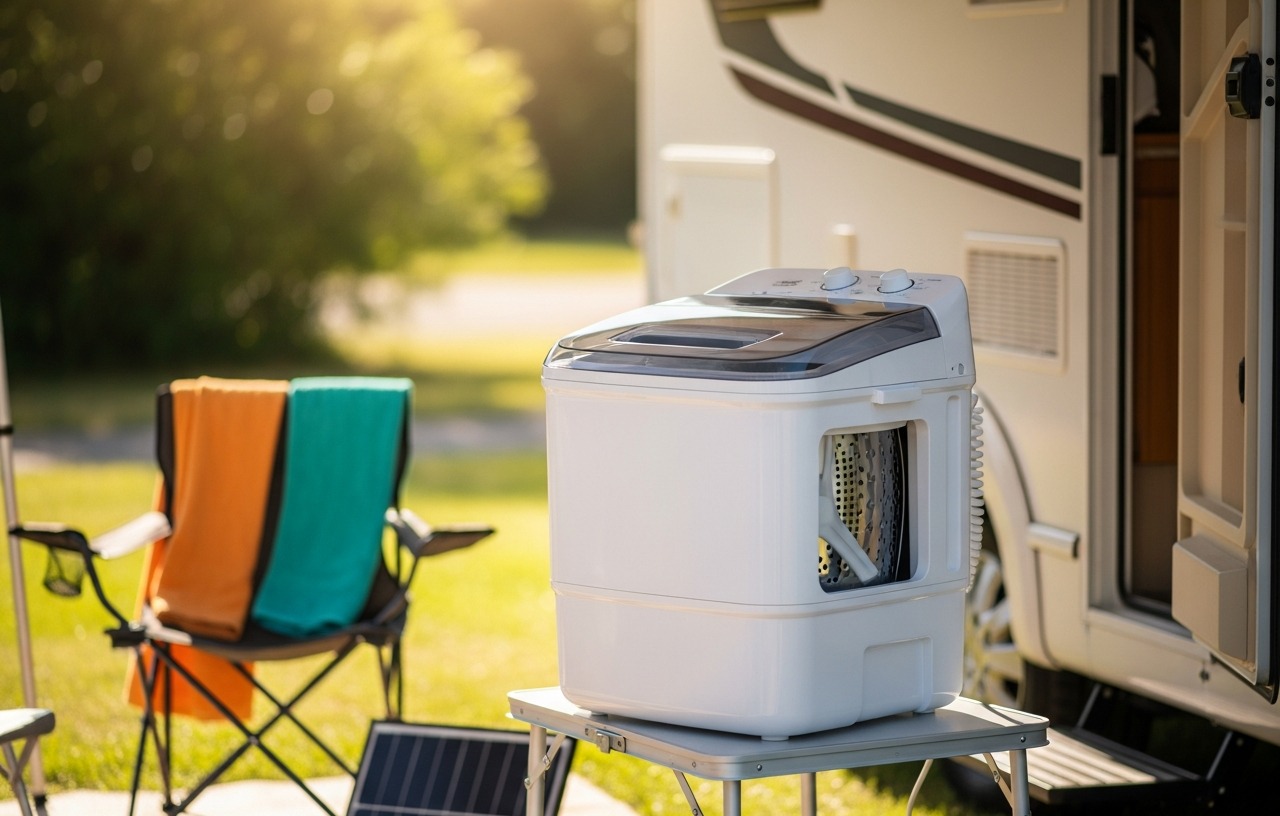
When purchasing a new portable washing machine, consider Energy Star certified models. These appliances meet strict energy efficiency guidelines set by the U.S. Environmental Protection Agency. You can research models specifically designed for efficiency. The Best Portable Washing Machines for RV Living & Camping often prioritize energy and water efficiency due to limited resources.
Portable Washing Machine Repair Costs: When DIY Makes Sense
Beyond electricity costs, the long term expense of a portable washing machine includes potential repairs. Understanding typical repair costs helps you decide whether to fix a broken machine or replace it. For compact appliances, this decision often comes down to the cost of parts versus the cost of a new unit, especially given their generally lower purchase price compared to full-sized washers.
Common Failures and Their Cost Implications
Portable washing machines can experience issues similar to their full-sized counterparts, though parts are often less expensive. Common problems include:
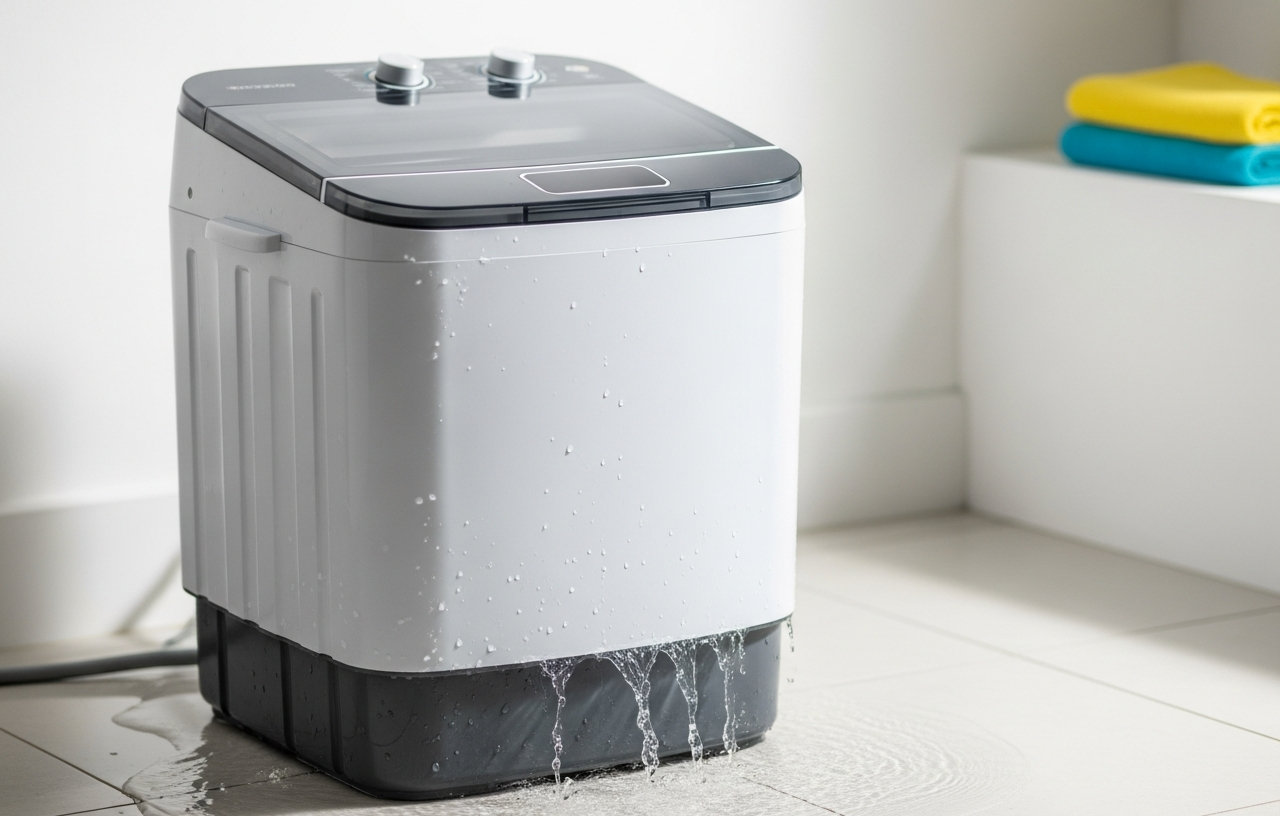
- Drain Pump Failure: The machine fills but does not drain, or makes a humming noise without water movement.
- Drive Belt Issues: The motor runs, but the tub does not agitate or spin properly.
- Water Inlet Valve Problems: Water either does not enter the tub or continuously fills it.
- Lid Switch Malfunction: The machine does not start because it thinks the lid is open.
For most portable washing machines, a new drain pump or drive belt is a relatively inexpensive part to acquire. More complex issues like motor failure or control board malfunctions are generally more costly and difficult to repair.
DIY vs. Professional Repair: A Cost Breakdown
Deciding between a do-it-yourself repair and hiring a professional involves weighing the cost of parts, your time, and your technical comfort level against the total expense of a technician. A professional appliance technician will charge for a service call or diagnostic fee, plus labor and parts. These fees typically range from $75 to $150 just for the visit, before any repairs begin. Labor rates can be $75 to $150 per hour, and most repairs take at least one to two hours.
Example Repair: Replacing a Drain Pump
Let's consider a common scenario: a faulty drain pump. Based on researched user experiences and parts availability:
- DIY Part Cost: A replacement drain pump for a portable washing machine typically costs between $25 and $75 when ordered online from appliance parts retailers (e.g., Amazon, AppliancePartsPros). If you can find the specific part at a local hardware store, it might cost $50 to $100.
- DIY Tools: Basic tools like a screwdriver set and pliers are usually sufficient. If you do not own these, a basic set costs $20 to $50.
- DIY Time: Replacing a drain pump can take 1 to 2 hours for someone with basic mechanical skills, following online tutorials or service manuals.
- Professional Repair Cost:
- Service Call/Diagnostic Fee: $75 to $150
- Labor (1-2 hours): $75 to $300
- Part Cost (marked up by technician): $50 to $100
- Total Professional Repair: $200 to $550
When DIY Makes Financial Sense: If your portable washing machine cost less than $300-$400 new, and the repair involves an inexpensive, accessible part like a drain pump, drive belt, or lid switch, a DIY fix is often the most economical choice. Spending $50-$75 on a part and a couple of hours of your time is a significant saving compared to a $200-$550 professional repair. This approach is particularly viable for machines that are only a few years old and otherwise in good condition.
When the Risk is Not Worth It: If the repair involves the main motor, transmission, or the control board, the parts alone can cost $100-$200 or more. The complexity of these repairs increases the risk of further damage if attempted by an amateur. In such cases, a professional repair could easily approach or exceed the cost of buying a brand-new portable washing machine (which typically range from $200 to $500). For older machines (5+ years old) with significant issues, the cost-benefit analysis often favors replacement. Similar considerations apply to other compact appliances. Expect to pay between $0.007 and $0.07 per load for electricity, with variations based on your machine's features and local utility rates. By adopting energy-saving habits like cold water washing and full loads, you can keep these operational costs to a minimum. For more extensive or complex failures, especially on older machines, purchasing a new unit might offer better long term value than a costly professional repair.